
How to choose the right programmable room temperature controller for my apartment?

Are your heating bills too high? A cold apartment is bad. Wasting money is worse. I will show you how to find the perfect thermostat to fix this problem.
You want to choose the right programmable room temperature controller. You must first check its compatibility with your heating system. Next, focus on flexible scheduling features for energy savings. Finally, choose simple controls over complex smart features for daily comfort.
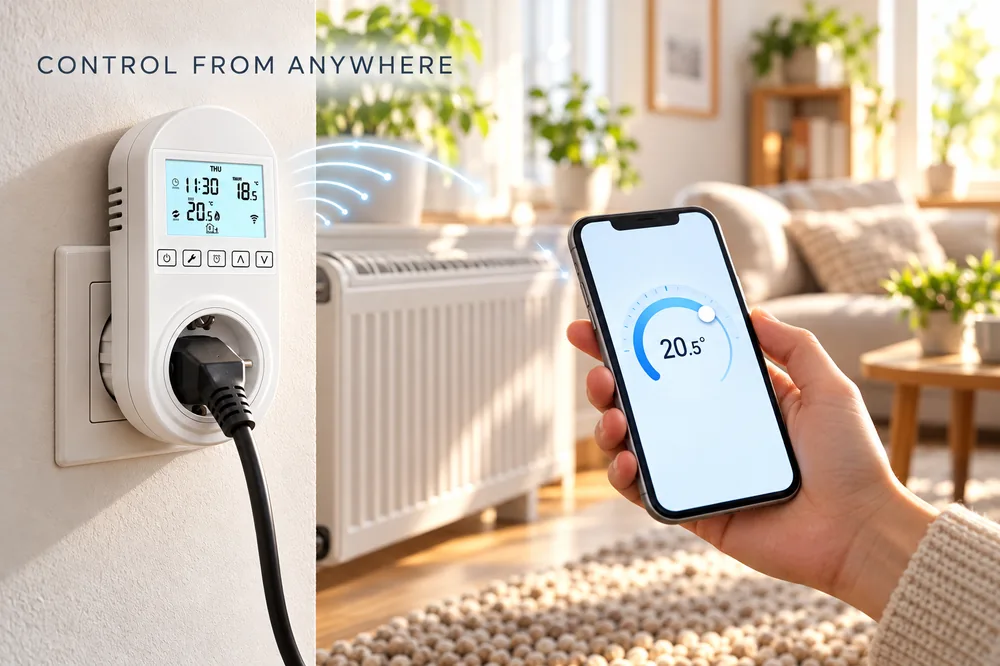
You might think the most expensive device solves all heating problems. I made that mistake early in my career. I soon learned a better way. True comfort requires a different approach. Keep reading to find out what really matters. Stop and read this before you spend your money.
Does the thermostat match your current heating system?
You buy a new device. You find it does not fit. This is very frustrating. You waste time and money. Check your system details first to avoid this common trap.
Your thermostat must match your specific heating setup. Check if your apartment uses underfloor heating or radiators. You must also verify the control type and voltage requirements. This makes sure the new controller works safely with your existing equipment.

I always tell my clients about safety. Compatibility is the basic rule. The device will fail if the voltage is wrong. It can even cause a fire. You must break down your system into simple parts. This helps you understand your needs.
Know Your Heating Setup
Different systems need different controllers. For example, electric underfloor heating usually needs a 16A thermostat. Water heating systems usually need a 3A thermostat. I remember a past project. A buyer ordered 500 units of the wrong voltage. We had to fix the whole order. That taught me a lesson. I always ask about the system first.
You can use a simple checklist to match your device.
| Heating System Type | Typical Current | Key Requirement |
|---|---|---|
| Electric Underfloor | 16A | High load capacity, external sensor |
| Water Heating | 3A | Dry contact or valve control |
| Radiator | 3A | Precise air temperature sensor |
| Boiler | 3A | Relay output matching |
Always check the manual of your current heating device. Look at the wires on your old thermostat. You likely have a high-voltage system if you see thick wires. It is probably a low-voltage system if you only see thin wires. Getting this right is the only way to succeed.
Why is flexible scheduling important for energy saving?
You leave the heat on all day. This wastes a lot of energy. High bills can ruin your budget. A good schedule fixes this. You heat only when needed.
Flexible scheduling saves energy by matching your daily habits. You can set the thermostat to lower the heat when you leave for work. Then, you can set it to warm up the room just before you return. This cuts energy waste without losing comfort.
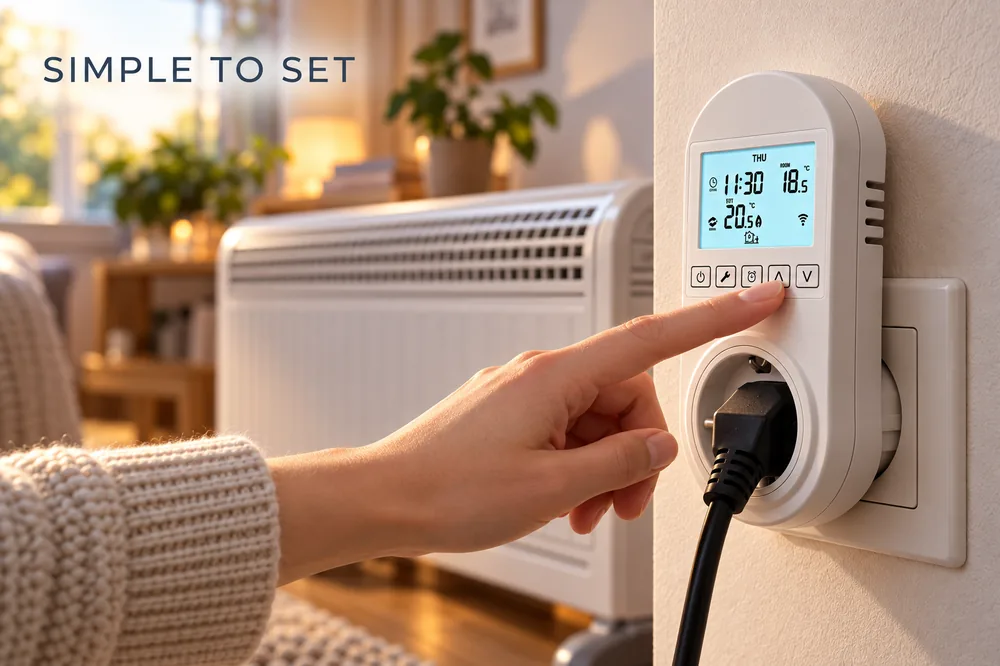
Energy costs keep going up everywhere. I see many people buy standard thermostats. They just leave them at one temperature. This is a huge waste. A truly good controller gives you choices. You should be able to set different rules for weekdays and weekends.
The Power of Weekly Programming
I test products in our factory. I look closely at the timing functions. A 5+2 days or 7-day program is very useful. You can plan your whole week once. You do not need to change the temperature every morning. The device does it for you. This small change cuts your heating bill by a large amount.
Here is a simple example of a good winter schedule:
| Time of Day | Status | Suggested Temperature | Reason |
|---|---|---|---|
| 07:00 - 08:30 | Wake up | 22°C | Keep warm while getting ready |
| 08:30 - 17:30 | Away at work | 16°C | Save energy while empty |
| 17:30 - 23:00 | Home | 21°C | Comfortable evening |
| 23:00 - 07:00 | Sleep | 18°C | Better sleep, less energy |
You use a schedule like this. You only pay for heat when you actually feel it. You stop heating an empty apartment. This is the smartest way to use a programmable room temperature controller.
Do you really need complex smart features for your daily life?
Many smart devices are too hard to use. You feel confused by endless menus. Choosing a simple and clear design removes this stress. It makes your life much easier.
You do not need the most complex smart features. A practical thermostat makes temperature management simple and flexible. Features like a clear digital display, easy physical buttons, and basic Wi-Fi are enough. They fit your living habits without causing any confusion.
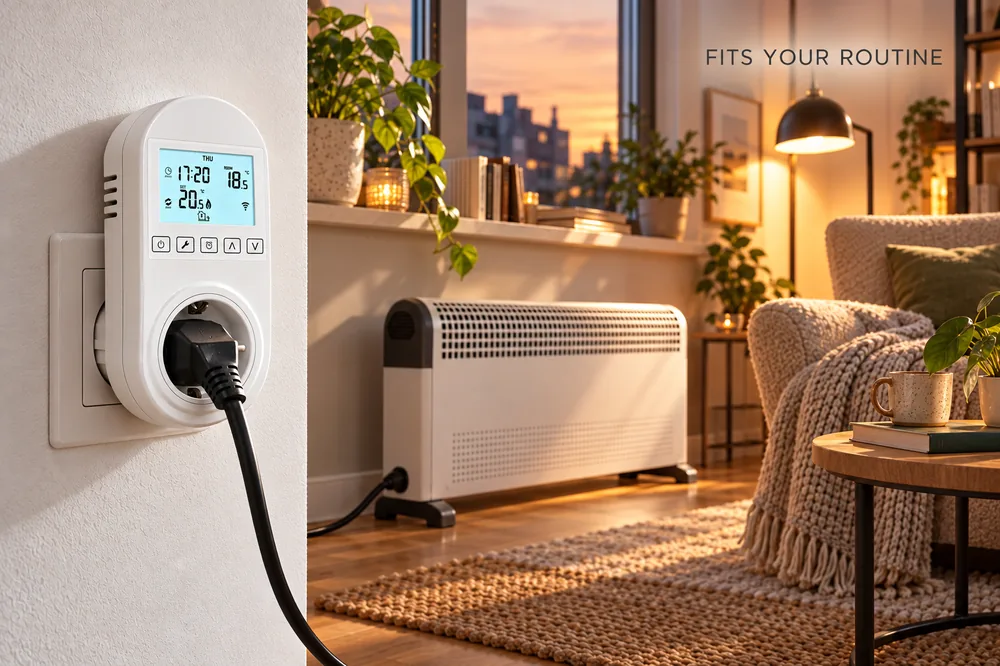
Many brands try to sell you useless features. They talk about AI learning. They talk about complex app connections. I supply electrical products worldwide. I know most users just want simple things. The product fails if it takes 10 minutes to change the temperature.
Finding the Right Balance of Tech
A good digital display is very important. You should read the numbers from across the room. Physical buttons are often better than touch screens. They respond instantly. Wi-Fi is great. But the app must be simple. You want to turn on the heat on your way home. You do not need a device to track your every move.
Let us compare basic features and complex features:
| Feature Type | Examples | User Value |
|---|---|---|
| Practical Core | Digital screen, firm buttons | High - Easy daily use |
| Useful Smart | Basic Wi-Fi app control | High - Remote access |
| Complex Smart | Voice control, AI tracking | Low - Often unnecessary |
| Design Focus | Clean layout, clear icons | High - Intuitive operation |
I always advise my B2B clients to pick user-friendly models. A device is easy to understand. Then people actually use the energy-saving modes. A simple tool is always better than a complex toy.
How to balance comfort, compatibility, and energy efficiency?
You focus only on cheap prices. This often leads to bad results. You get a cold room or high bills. Balancing all key factors is the only true solution.
You must balance comfort, compatibility, and energy efficiency to get real value. Do not just look at the price. Choose a thermostat that safely matches your system. It should lower your energy use through smart scheduling. It must keep your apartment warm when you need it.
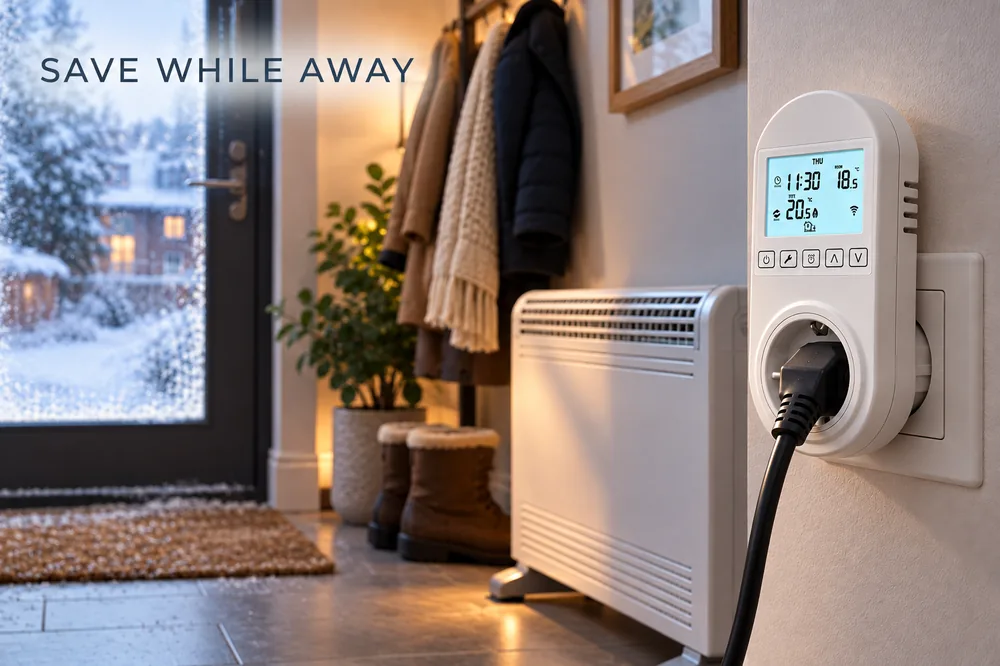
You want to choose the right controller. This is like building a strong house. You need a good foundation. Compatibility is the foundation here. The device fits your system. Then you are safe. Next, you build the walls. These are the energy-saving features. Finally, the roof is your daily comfort.
The True Value of a Thermostat
I see many cheap devices fail after a few months. The plastic breaks. The screen dies. We test our products in our lab at Timebest. We make sure they last. A good thermostat is a good investment. It lowers your power bills over time. It pays for itself.
Here is how you should rank your buying choices:
| Priority Level | Focus Area | What to Check |
|---|---|---|
| 1 - Must Have | Compatibility | Voltage, heating type, max load |
| 2 - Very Important | Energy Saving | 7-day programming, away mode |
| 3 - Important | Ease of Use | Clear screen, simple buttons, basic Wi-Fi |
| 4 - Less Important | Price | Do not buy the absolute cheapest |
You balance these things. You get a device that works silently in the background. It keeps you warm. It saves your money. It does not annoy you. This is the true goal of any good electrical product.
Conclusion
Choose a simple and compatible device. Balance flexible scheduling with easy controls. This saves energy. You will enjoy a comfortable apartment every day. This is the best choice.
<!--[googlesitekit-end-of-content]-->