
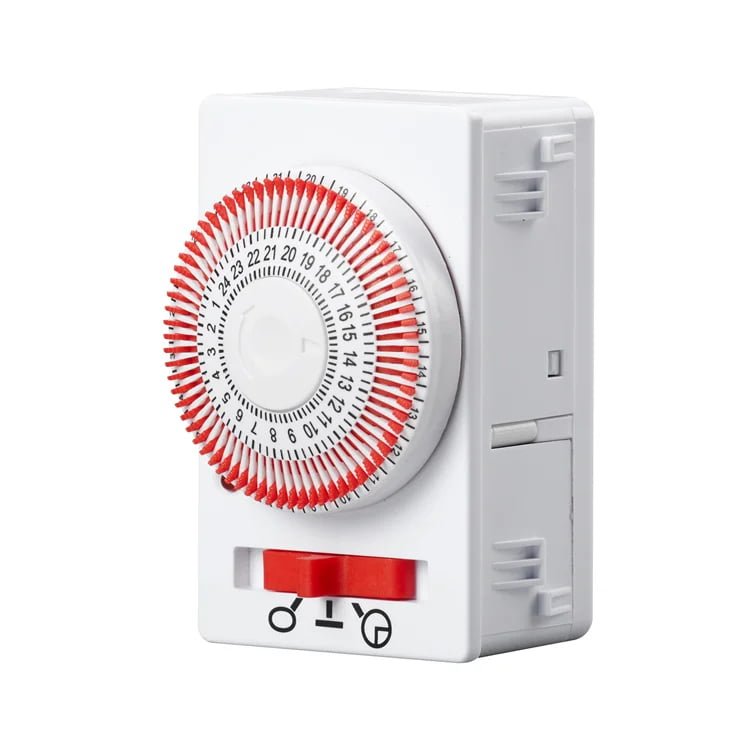
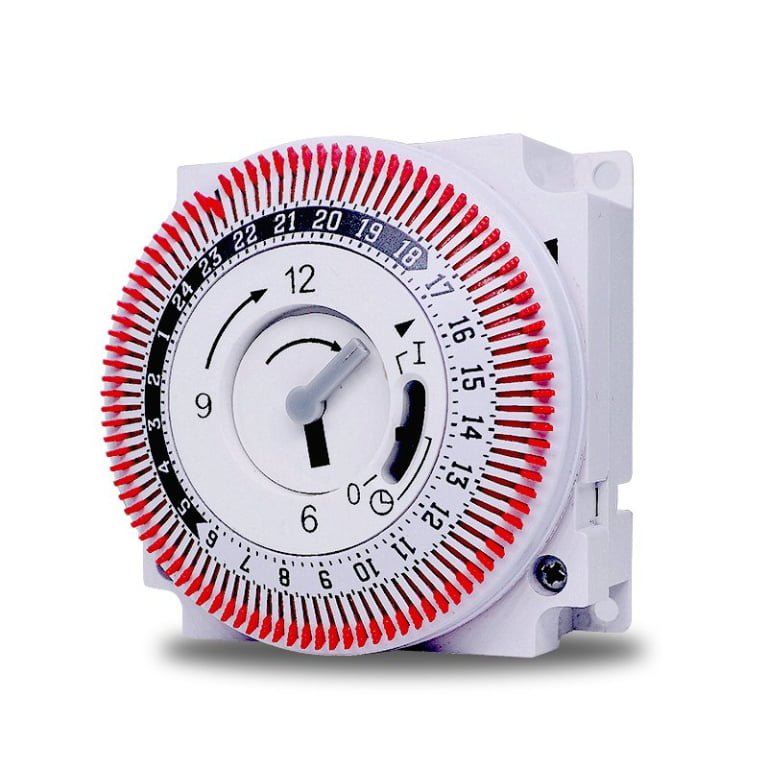
Compact 24H Timer Switch – Sells Standalone or Integrates into Your Own Panel Series
- Item No. SGT-11A
12 Months
View Details
Products
9
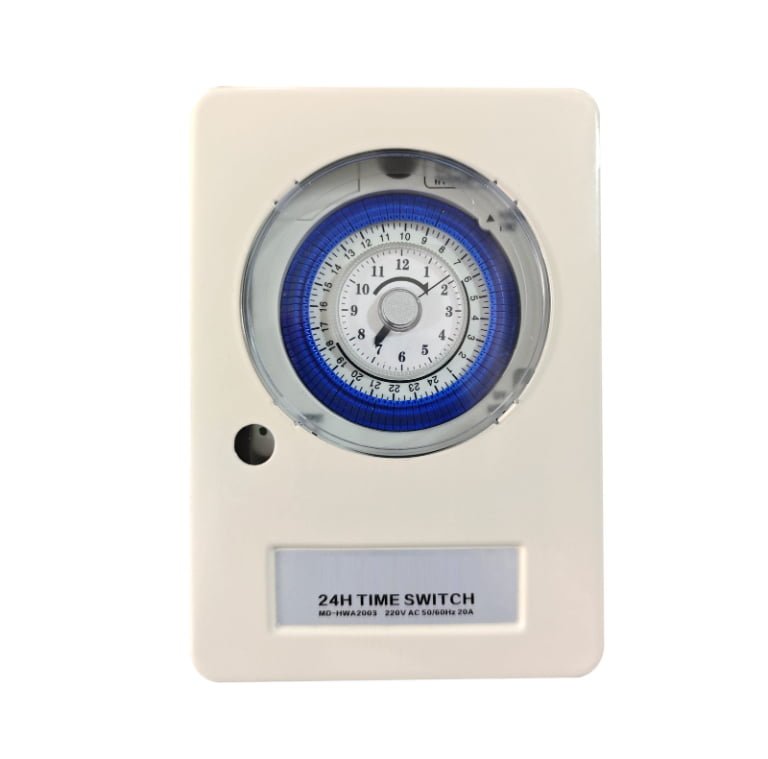
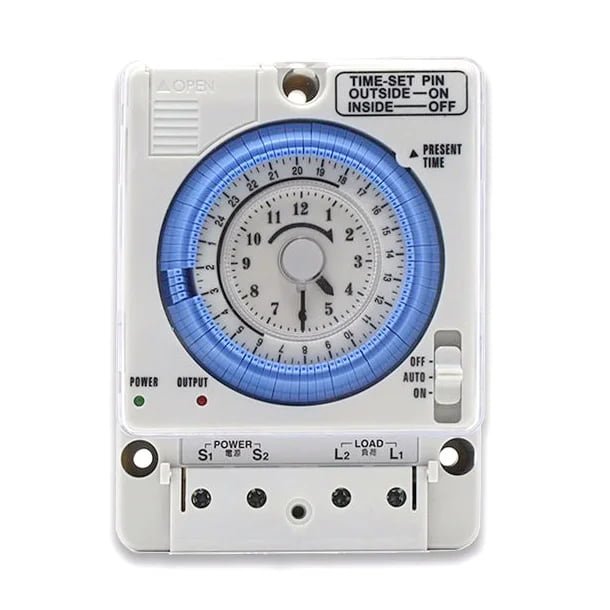
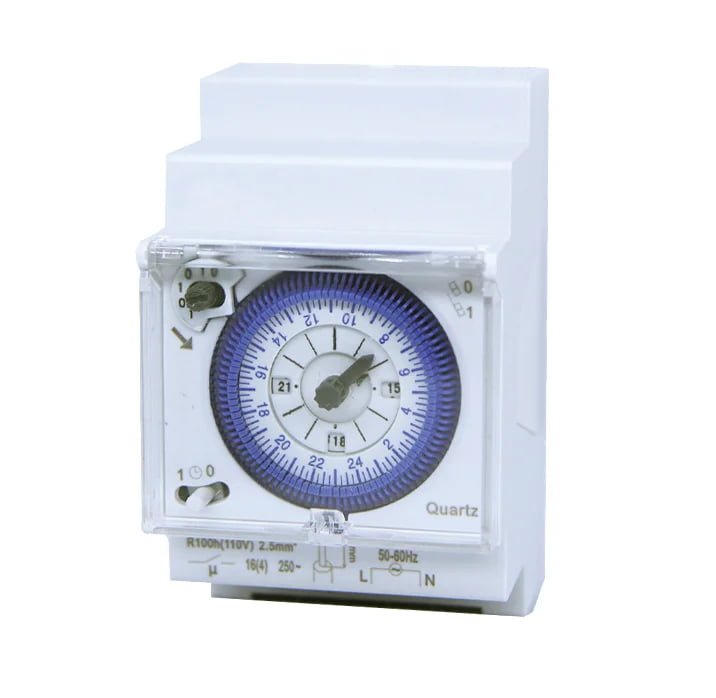
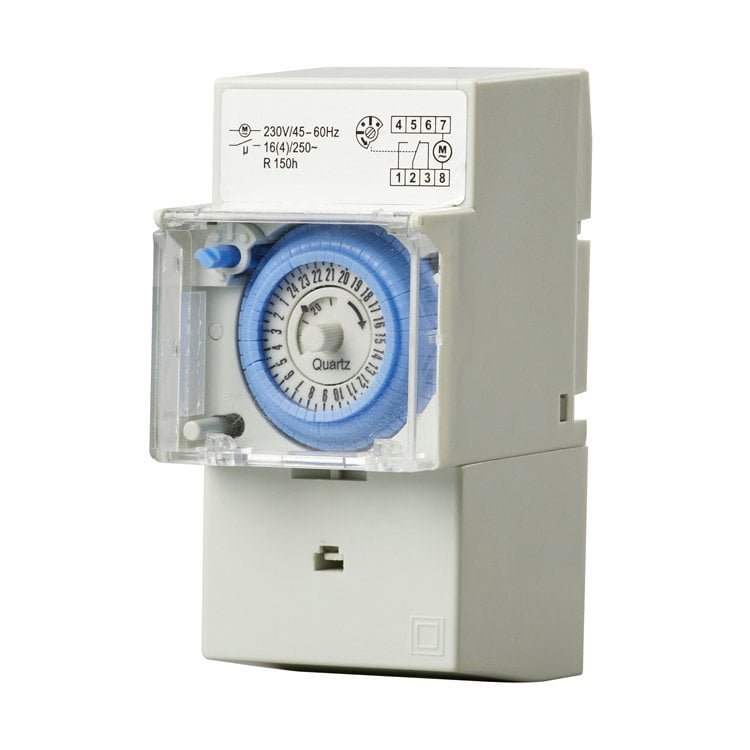
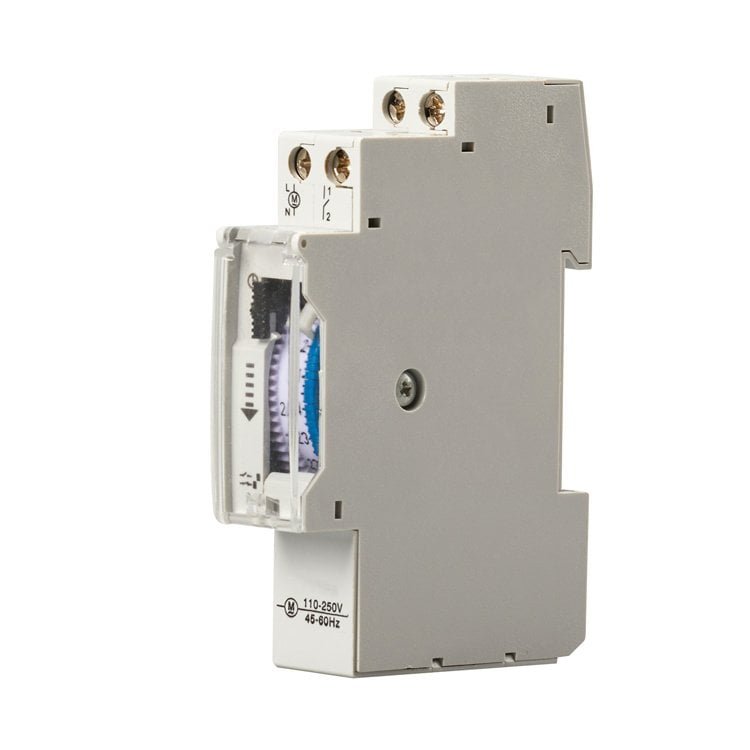
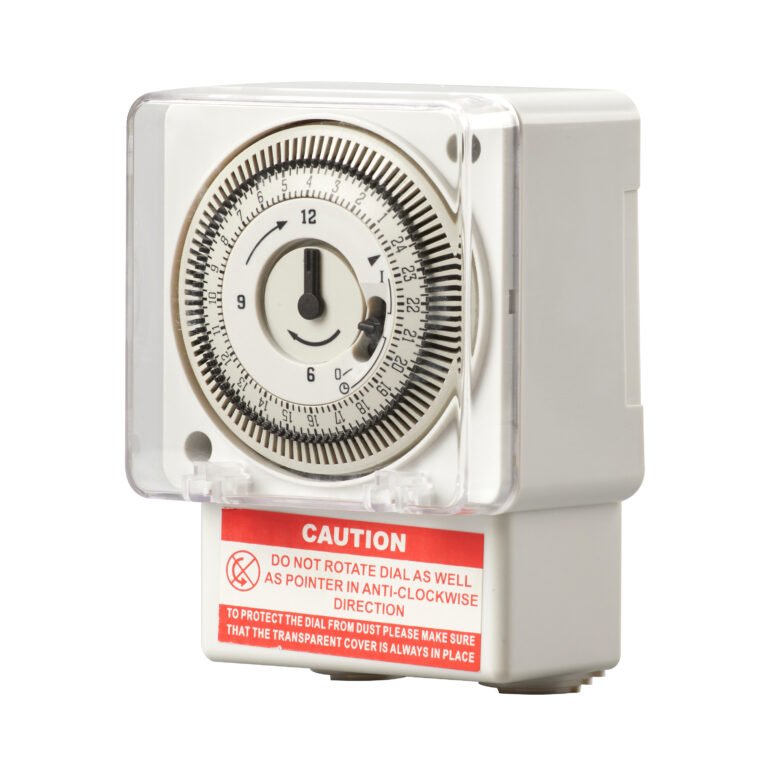
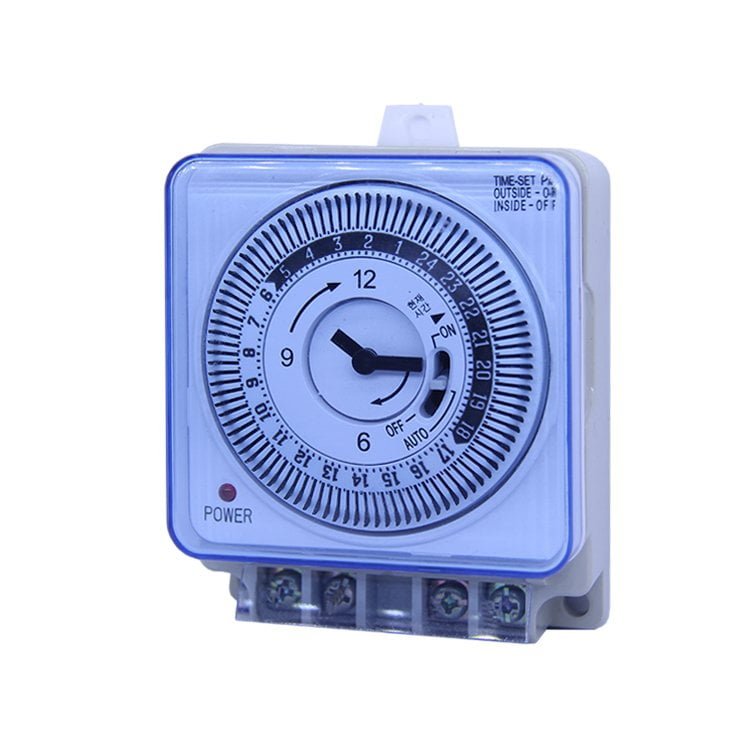
Real-World Uses
Explore practical ways to use Mechanical Timer Switch in everyday and professional settings.
Scenario 01
Scenario 02
Scenario 03
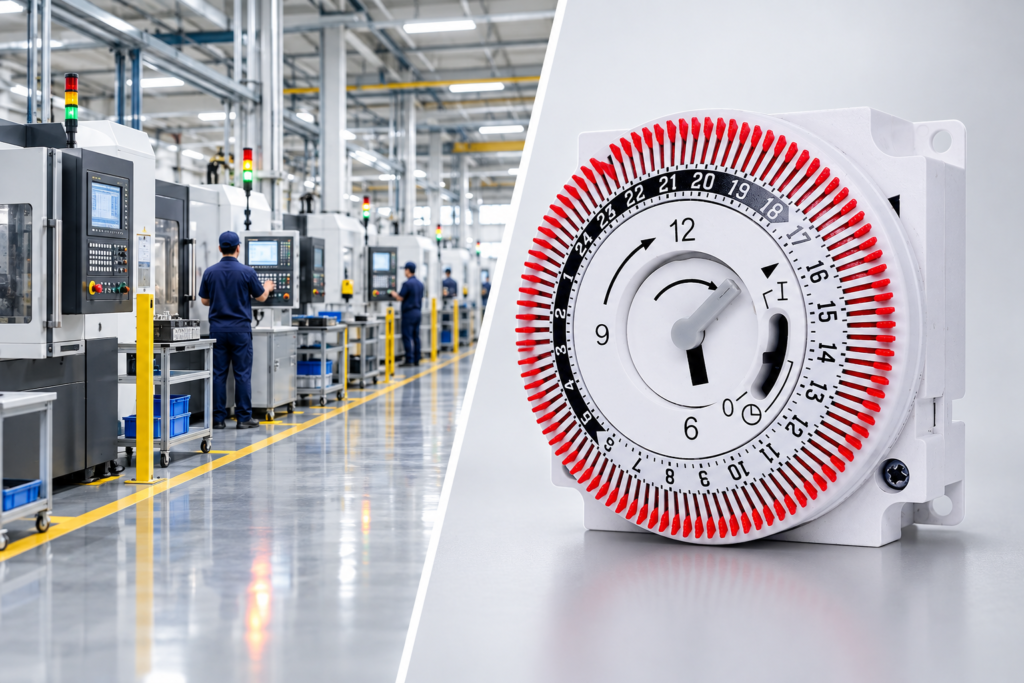
Scenario 04
Helpful Information
Answers to common questions about Mechanical Timer Switch.
A: A mechanical timer switch is a wall-mounted or panel-mounted device that automatically switches an electrical circuit on and off according to a preset schedule. Most models use a rotating 24-hour dial with adjustable segments or pins. Unlike a plug-in timer socket, it is hardwired into the electrical system and can replace or work alongside a standard wall switch, depending on the installation.
A: A mechanical timer socket plugs into an existing electrical outlet, and the appliance is then plugged into the timer. A mechanical timer switch is hardwired into a wall, distribution box, or control panel and controls the electrical circuit directly. Timer sockets are suitable for plug-in appliances, while timer switches are commonly used for fixed lighting, ventilation fans, pumps, and other permanently installed equipment.
A: Mechanical timer switches are simple, reliable, and easy to set using a dial. Most models do not require batteries or digital programming, making them suitable for repetitive daily schedules such as lighting and ventilation control. Digital timer switches generally provide greater timing precision and more flexible functions, including weekly programs and multiple schedules. For more complex scheduling requirements, see our digital timer switches.
A: Most mechanical timer switches do not have a battery and operate directly from the electrical supply. Depending on their internal design, they may stop keeping time during a power outage and require the current time to be reset when power returns. Some models include a backup battery or power reserve to retain the time and programmed settings. For battery-backed options, consider our digital timer switches.
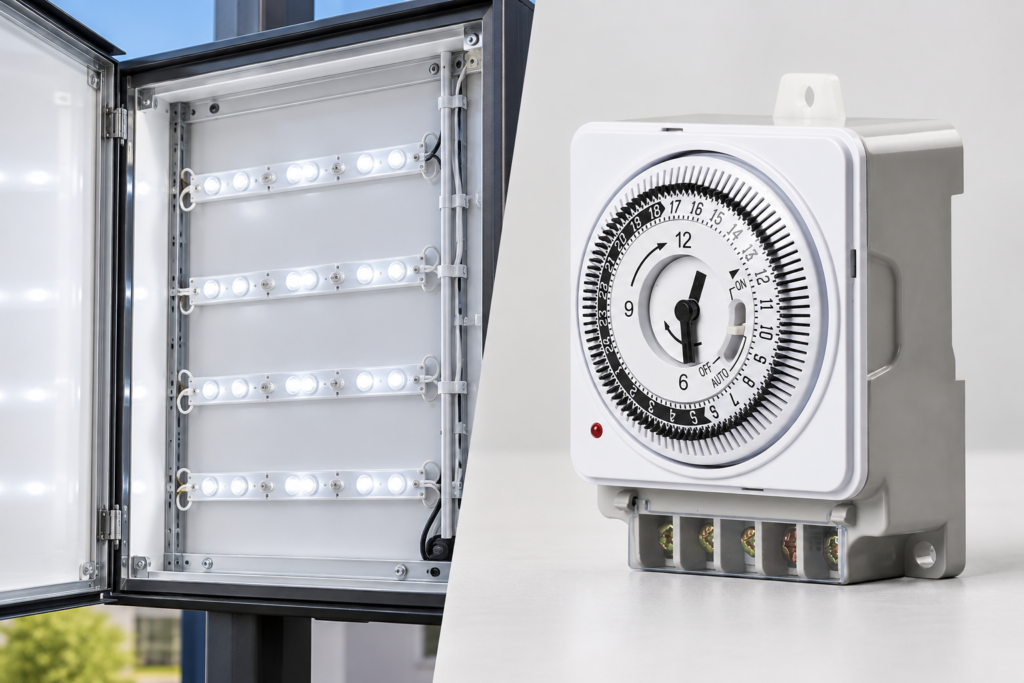
A: Mechanical timer switches are commonly used with ceiling lights, exhaust fans, bathroom ventilation systems, outdoor lighting, water pumps, and other fixed electrical equipment that requires a repetitive daily on/off schedule. Before installation, check the equipment’s voltage, operating current, starting current, and load type against the timer switch specifications.
A: Yes, provided that the fan’s voltage, operating current, and starting current are within the timer switch’s rated capacity. Our standard switches are typically rated at up to 16A/230V or 15A/110V, depending on the model and load type. Because fans are motor loads and may draw a higher current during startup, always check both the timer specifications and the fan rating before installation. For heavy-duty or industrial fans, see our industrial timer page.
A: Yes. For outdoor lighting, choose a timer switch with an appropriate IP rating or install it inside a suitable weatherproof enclosure. The enclosure and installation method should protect the switch and wiring connections from rain, condensation, dust, and moisture. Indoor timer switches should not be installed in exposed outdoor locations.
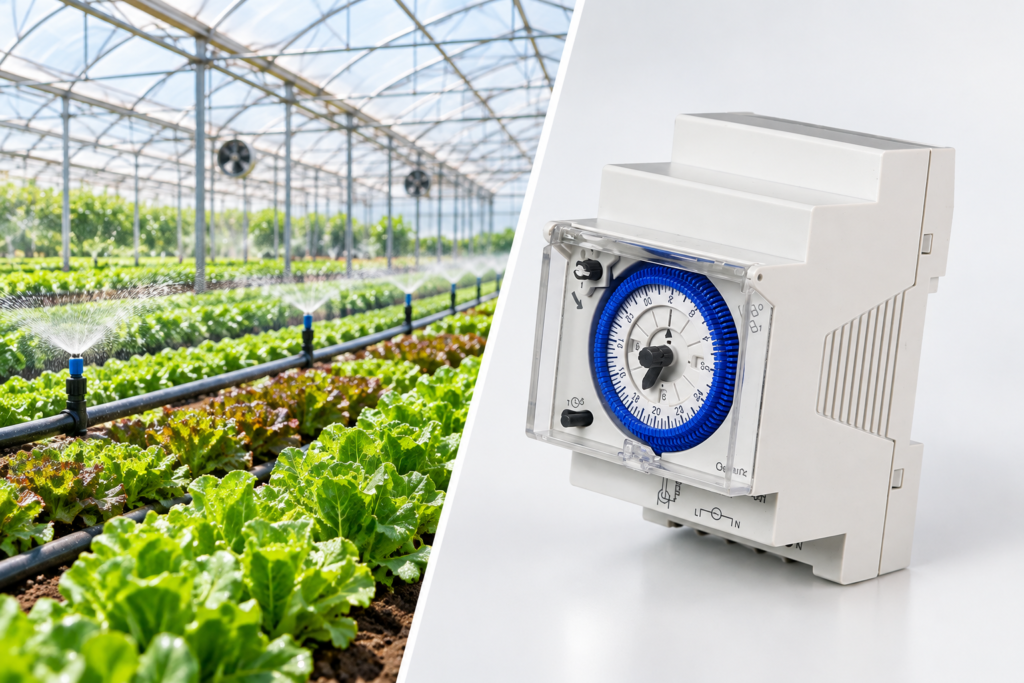
A: Yes, a mechanical timer switch can be used for simple daily water-pump scheduling if its electrical rating is suitable for the pump. Pumps are inductive loads and can draw a much higher current when starting, so check the pump’s operating current, starting current, and motor load rating before installation. A contactor or another suitable control device may be required for higher-power pumps. For heavy-duty pumps, see our industrial timer page.
A: Our standard mechanical timer switches typically support up to 16A/230V or 15A/110V, depending on the model. The permitted load may be lower for motors, pumps, LED lighting, fluorescent lighting, and other inductive or capacitive loads than for resistive loads. Some models are available with higher ratings. Always check the load specifications of the individual model before installation.
A: Most models have a minimum setting interval of 15 minutes, while some models use a 30-minute interval. A 24-hour model covers one complete daily cycle and automatically repeats the programmed schedule each day. The number of available on/off periods depends on the dial design and the number of adjustable segments. See our full product range for available options.
A: A 24-hour timer switch repeats the same programmed schedule every day. A 7-day timer switch allows different schedules to be set for different days of the week. A 24-hour model is suitable for regular daily routines, while a 7-day model offers greater flexibility when weekday and weekend schedules differ. We offer both types; please check the individual product specifications to confirm whether a model is mechanical or digital.
A: Yes. We offer mechanical timer switches designed for different supply voltages, frequencies, installation methods, terminal configurations, and market requirements, including applications in the UK, EU, US, and other regions. Wiring requirements can vary by model, and some switches may require a neutral connection. Parameters, terminals, housing designs, and other features can be customized subject to the applicable MOQ. Learn more about OEM/ODM customization.
A: Selected mechanical timer switch models are available with CE, RoHS, GS, and other certifications or compliance documentation for European markets. Certification status varies by model and target country, so please confirm the required certification before ordering. Other certifications and testing options may be available depending on your market and order requirements.
A: Depending on the model and order requirements, we conduct appearance inspections, timing and switching function tests, electrical load tests, dielectric strength and insulation checks, terminal and wiring inspections, and aging tests before shipment. Packaging and labeling are also inspected before dispatch. Production samples are retained for quality reference and traceability.
A: We provide a minimum one-year warranty for our mechanical timer sockets. The exact warranty terms depend on the product model, order agreement, and application conditions.
For warranty details or after-sales support, please contact our team. visit our contact page.
A: Our standard minimum order quantity is 2,000 pieces. For trial orders or selected models, we may offer a lower quantity, such as 500 pieces.
The available quantity depends on the model, customization requirements, packaging, and production schedule. Contact us for a quotation based on your requirements.
A: A:Yes. We provide OEM and ODM customization services, including:
Logo printing
Custom dial designs
Product colors
Labels and instruction manuals
Individual packaging
Export carton designs
Minimum order quantities apply and vary according to the customization requirements.
A: Yes. Samples are available for product testing and approval before bulk production. Sample availability, cost, customization options, and delivery time depend on the selected model.
Contact us with your required plug type, voltage, current rating, application, and target market.
A: We use reinforced export packaging designed to reduce the risk of damage during long-distance transportation. Products are typically packed in individual packaging, double inner cartons, and a thick outer master carton.
Custom packaging, labels, barcodes, manuals, and carton markings are also available upon request.
Start a Conversation
Tell us your product, quantity and target market. We will recommend suitable models and reply within 6 hours during working days.
NINGBO OFFICE
Building 2, No.12, Yiwu East Road, Shangyu, Ningbo, Zhejiang, China.