
What Is a Thermostat and How Does It Work?
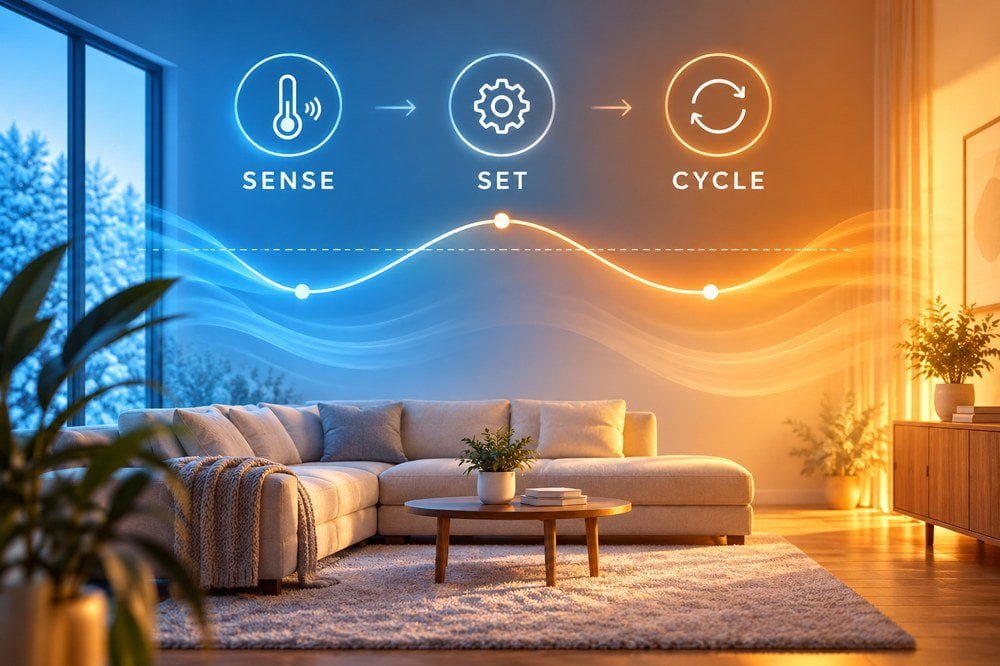
Are your spaces too hot or too cold? Wasting energy costs you money. A thermostat solves this problem. It keeps your temperature perfect and saves energy every day.
A thermostat is a device that controls temperature. It senses the room temperature and turns your equipment on and off. This keeps the temperature at your set level. Plug-in thermostats are very easy to use because they require no special wiring.
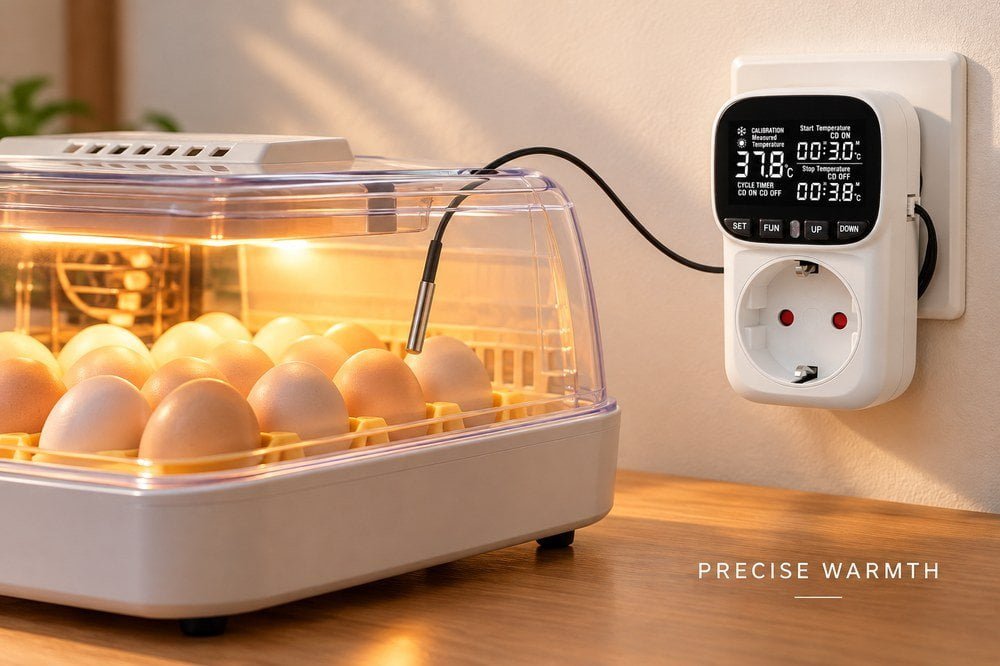
You might think all thermostats are the same. But knowing how they work will change how you manage energy. Let me show you the hidden details.
Why Are Plug-In Thermostats a Better Choice for Local Temperature Control?
Hardwired systems are hard to install. They cost too much time and money. Plug-in thermostats give you a fast and easy way to control temperature anywhere.
Plug-in thermostats are a better choice because they need no complex wiring. You plug them into a standard wall socket. They offer flexible and fast temperature control. This makes them perfect for small spaces, greenhouses, pet areas, and plant nurseries.
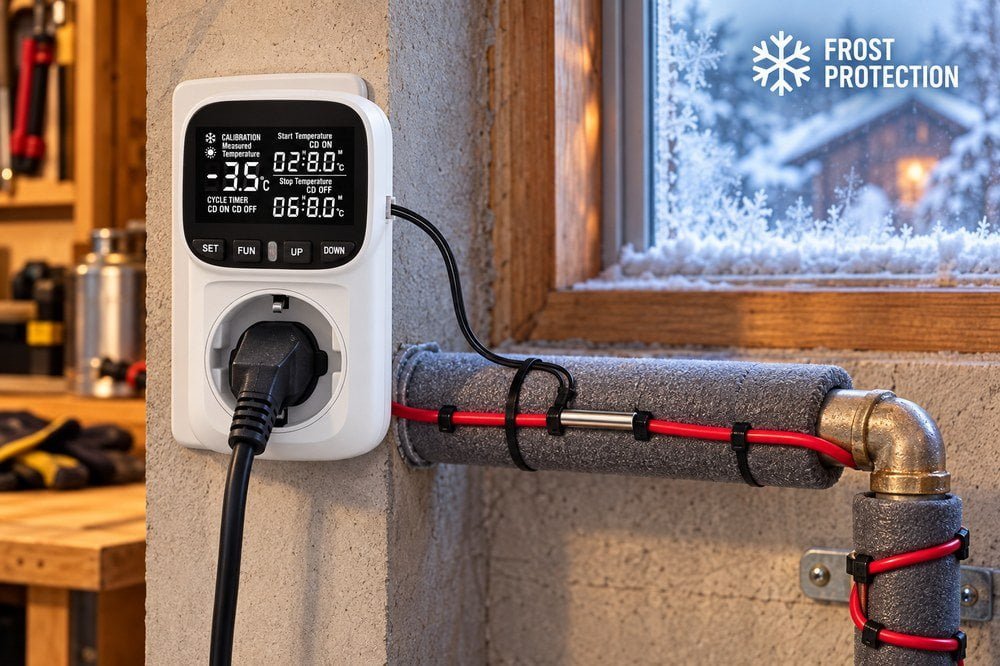
I work with many electrical wholesalers at Timebest. I see many buyers struggle with complex installations. Traditional thermostats connect to central heating. They need professional installers. This takes a lot of time. It also costs a lot of money. Plug-in thermostats solve this big problem. I always tell my clients that plug-in models are like smart adapters. You plug them in. They are ready to work right away.
The Real Value of Easy Installation
You do not need an electrician. This saves you money. Many of our DIY store clients love this feature. Homeowners buy these products because they are safe. They are also very easy to use. We make these devices to help people control local spaces. For example, a pet owner wants to keep a dog house warm. A central system cannot do this well. A central system heats the whole house. A plug-in thermostat does the local job perfectly. It focuses on one small area.
Common Application Scenarios
We can look at common uses for these devices. I help brand owners design packaging for different markets. We find that specific uses drive most sales.
| Application Area | Why It Needs a Plug-In Thermostat |
|---|---|
| Greenhouses | Plants need strict temperature ranges to grow well. |
| Pet Heating Pads | Animals need safe heat without getting burned. |
| Seed Starting | Seeds need warm soil to sprout fast. |
| Space Heaters | Small rooms need extra heat without turning on the whole house system. |
These scenarios show a clear point. Flexible control is very important. You can move the device from a greenhouse in the spring to a garage in the winter. This flexibility makes it a great product. Chain retailers sell these items all year round.
How Does a Plug-In Thermostat Actually Work?
Do you worry about your heater running all day? Manual control is annoying and wastes power. A plug-in thermostat works automatically to turn your devices on and off.
A plug-in thermostat works by using a built-in sensor to detect the room temperature. You plug your heater into the thermostat. When the temperature hits your limit, an internal switch turns the power on or off. This keeps the temperature inside your chosen range.
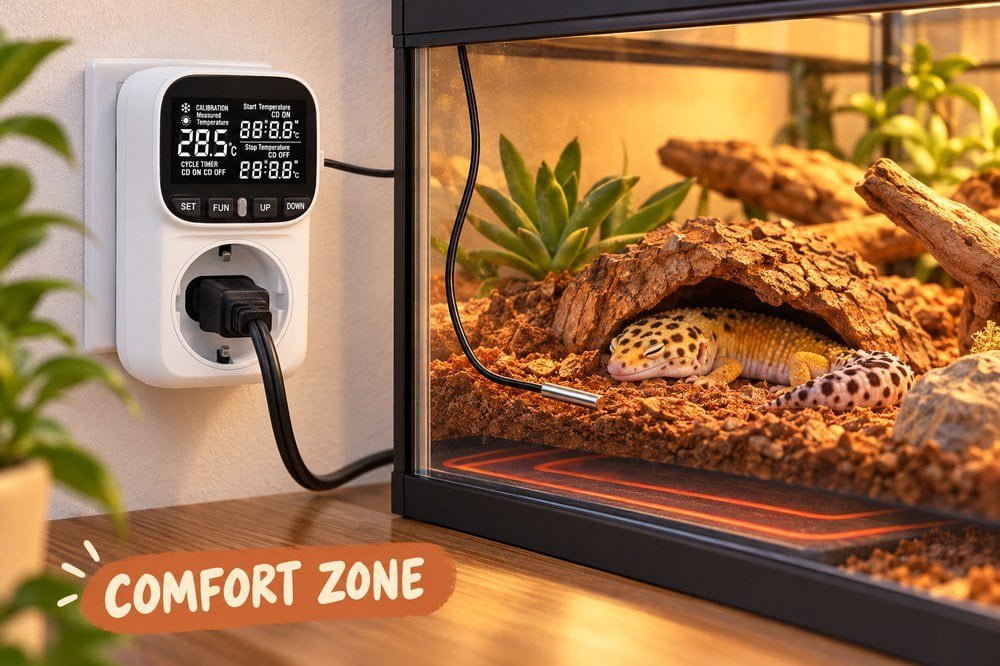
The working principle is actually very simple. I explain this to new brand purchasers often. The thermostat is a gatekeeper for electricity. It does not create heat. It does not create cold. It only controls the power flow to your device. You set a target temperature. The device does the rest of the work.
The Role of the Sensor and Switch
Every thermostat has a temperature sensor. This sensor checks the air constantly. Inside the device, there is a relay switch. The sensor feels the target temperature. It sends a signal to the switch. The switch opens or closes. This action stops or starts the electricity. Our factory tests these switches thousands of times. We must ensure they do not fail. A failed switch is dangerous. The heater might stay on forever. We prevent this with strict quality control.
Heating Mode vs. Cooling Mode
You must understand the two basic modes. The logic changes based on your goal.
| Mode | Action When Temperature Rises | Action When Temperature Drops |
|---|---|---|
| Heating Mode | Turns OFF the power (stops heater) | Turns ON the power (starts heater) |
| Cooling Mode | Turns ON the power (starts cooler) | Turns OFF the power (stops cooler) |
The Importance of Temperature Differential
We use a concept called temperature differential. Some people call it hysteresis. This is the gap between turning on and turning off. You might set the target to 25 degrees. The device will not turn on and off every single second. That rapid action would break your heater. Instead, it waits. It waits until the temperature drops to 23 degrees to turn on again. This small gap protects your equipment. It makes the system run smoothly for many years.
What Should You Look For When Buying a Thermostat?
Buying the wrong thermostat can ruin your equipment. Cheap models break fast and cause safety risks. You need to know how to choose the right one for your needs.
When buying a thermostat, you must look beyond the price and screen. You should check the control mode, the temperature range, and the maximum load power. You must also make sure it is compatible with your equipment to ensure safe use.
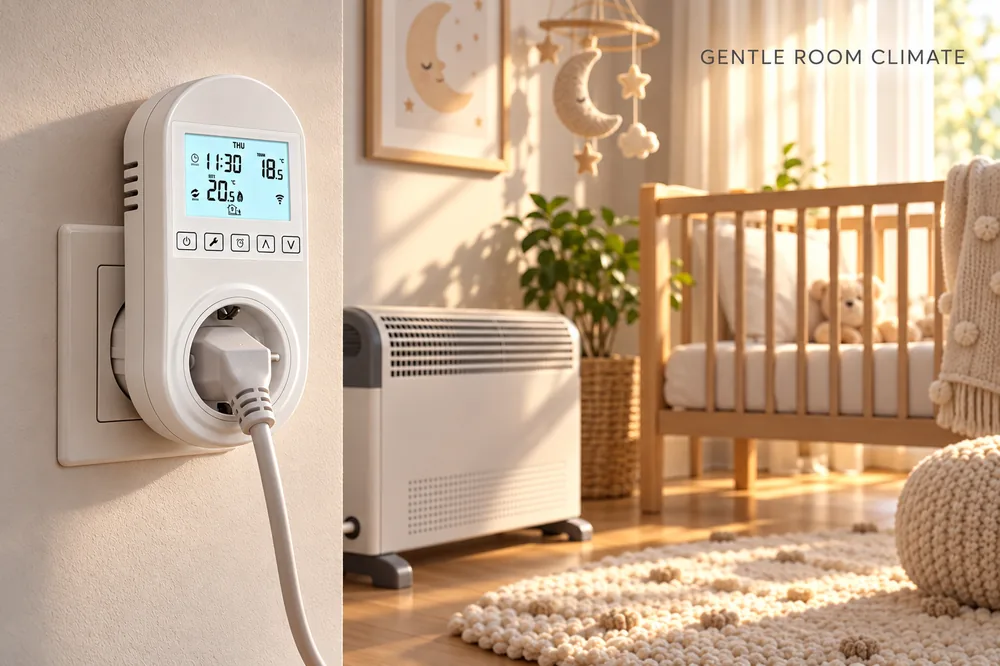
At Timebest, we supply electrical products to many regions. We ship to Europe, South America, and the Middle East. I always tell my clients that choosing a thermostat is serious business. You cannot just pick the cheapest one. You must match the temperature control accuracy with your real needs. A good thermostat truly shows its value over time. It works safely for years.
Check the Load Power and Compatibility
I see one common mistake all the time. People plug a big heater into a small thermostat. The switch inside will melt. You must read the maximum wattage. Your heater might use 2000 watts. Your thermostat must support at least 2000 watts. It is better if it supports more. You must also check the plug type. Different countries use different plugs. We make custom solutions for this exact reason.
Essential Buying Factors
I share a simple checklist with our B2B distributors. You can use it too.
| Feature to Check | Why It Matters |
|---|---|
| Maximum Load Power | Prevents fire hazards and device failure. |
| Certification (CE, RoHS) | Proves the product passed strict safety tests. |
| Temperature Range | Ensures it works for your specific use. |
| Control Accuracy | Keeps sensitive things perfectly safe. |
Customization for Brand Owners
You might be a brand purchaser. You want more than just a working device. You want a product that represents your company. We help brands customize the logo. We also customize the style and packaging. A unique look helps you sell more items. We provide OEM and ODM services. We make sure the final product fits your exact market channel. Good quality builds trust. Clear safety ratings build trust with your final customers.
Conclusion
A thermostat is a smart tool for comfort and energy saving. By choosing the right plug-in model, you get easy, safe, and flexible temperature control for any small space.
<!--[googlesitekit-end-of-content]-->