
Mechanical Timer Switch VS Digital Timer Switch: Which to Choose
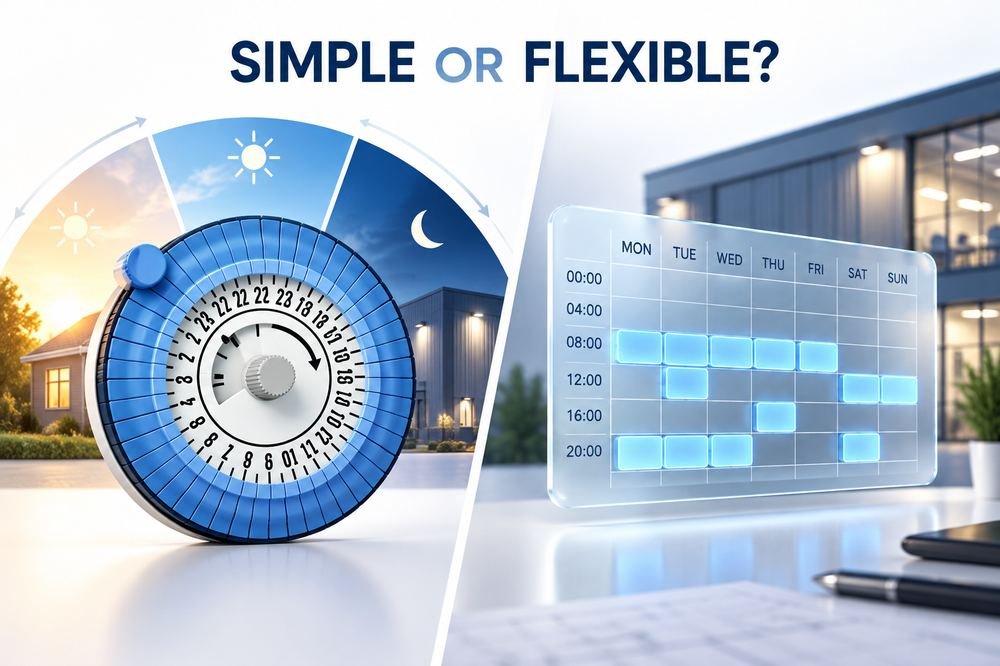
Do you feel confused when you buy timer switches? If you pick the wrong type, you waste money and cause user complaints. I will help you pick the right one.
You should choose a mechanical timer switch for simple daily tasks like basic lighting. You should choose a digital timer switch when you need minute-level precision or weekly schedules for commercial use. The right choice depends entirely on your exact application.
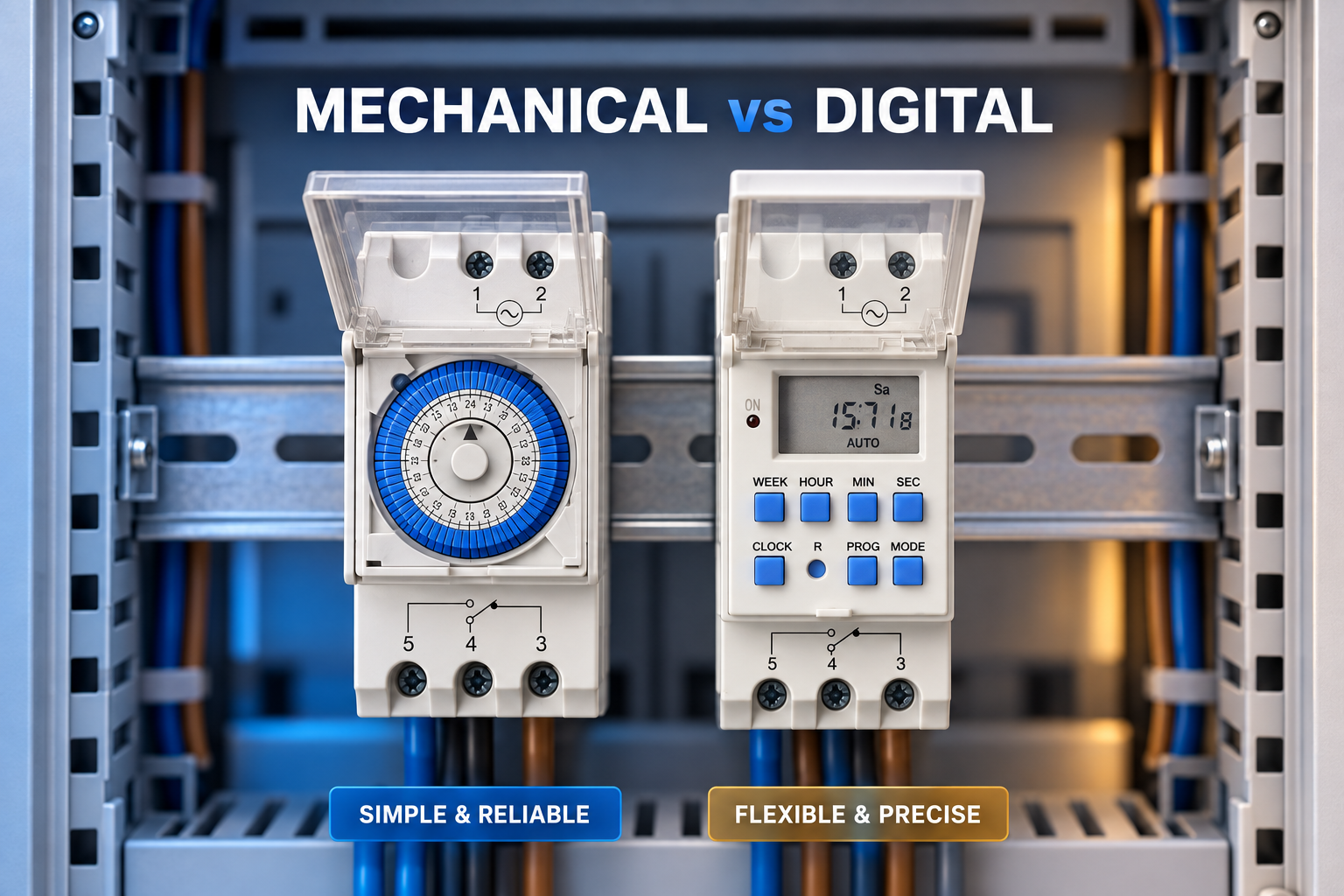
You might think the digital version is always the better choice because it looks modern. I hear this from many new clients, but my experience in our manufacturing plant proves this idea wrong. Let us explore the real differences so you can make the most profitable choice for your business.
What makes the mechanical timer switch so simple and reliable?
Are your customers tired of reading long manuals? Complex screens frustrate many users. A mechanical timer solves this exact problem with a very simple and clear design.
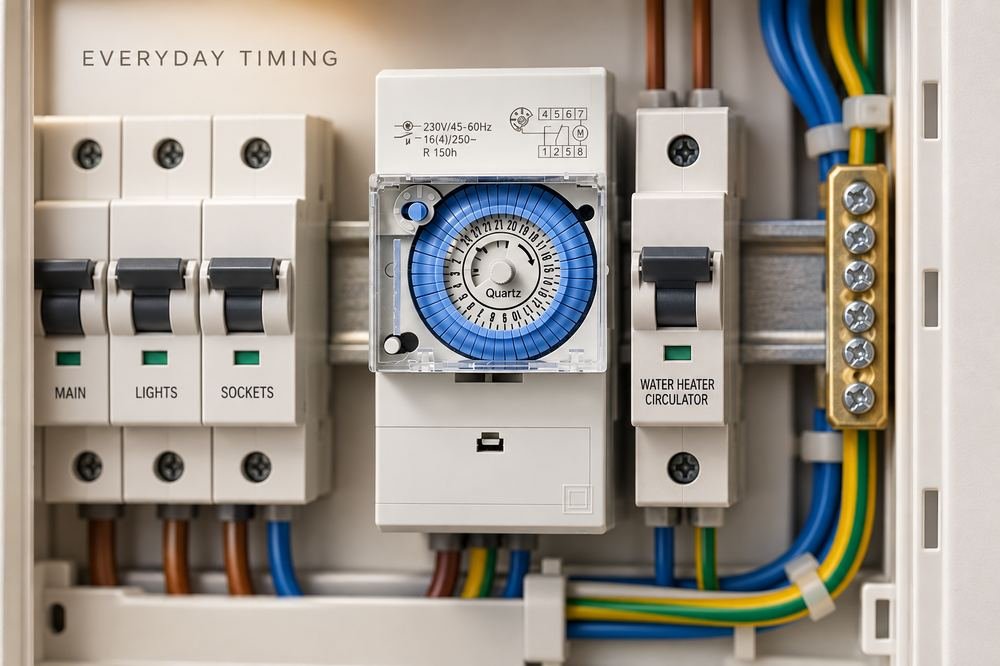
You set a mechanical timer switch by turning a dial or pushing down small pins. This design requires no digital screens. It is highly reliable for tasks that repeat at the exact same time every single day.
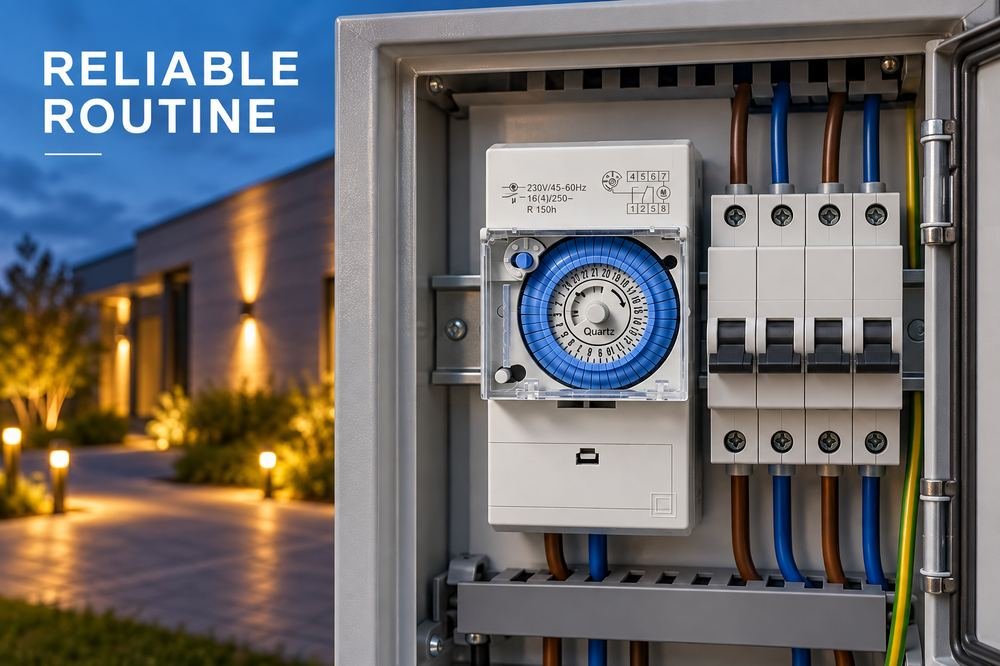
I always tell my clients that simple is often best. I remember a client from Europe. He wanted to buy timers for basic advertising light boxes. He initially asked for digital timers. I advised him to test our mechanical models instead. He found that his installers loved the mechanical ones. The installers did not need any training. They just pushed the pins and left.
The core benefits of mechanical timers
A mechanical timer switch has a very clear working logic. You can see the setting right away. This visual feedback gives users confidence.
Common uses for mechanical timers
Mechanical timers work best in areas where the schedule never changes.
| Feature | Description | Best For |
|---|---|---|
| Dial setting | Push pins to set time | Users who hate manuals |
| 24-hour cycle | Repeats exactly every day | Shop signs and basic lights |
| Tough build | No sensitive digital parts | Dusty or hot environments |
We produce thousands of these units at Timebest every month. They rarely come back with problems. They are the true workhorses of the electrical control world. We test these mechanical units rigorously. They provide long-lasting service for your customers.
Why do complex projects need a digital timer switch?
Does your project need different schedules for weekends? A basic timer cannot handle this. You need the smart control of a digital timer switch to succeed in this job.
A digital timer switch allows you to set different programs for different days. It offers exact minute-level accuracy. You must use a digital timer when your project requires complex timing logic, such as factory operations or commercial heating.
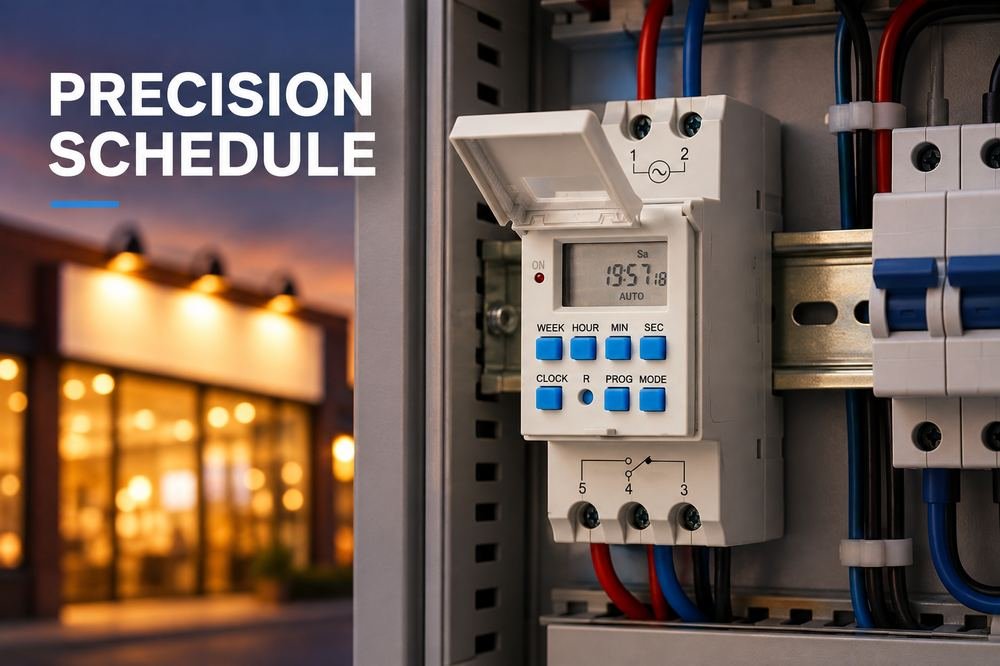
Sometimes simple is not enough. I worked with a smart home system integrator last year. They needed to control a large commercial HVAC system. The system had to turn on at 7:00 AM on weekdays. It had to stay off on weekends. A mechanical timer cannot do this. We supplied them with our custom digital timer switches.
The power of exact control
A digital timer switch gives you total control over time. You can set it to the exact minute. You can program multiple on and off cycles in one single day.
When precision matters most
Digital timers fit perfectly into modern environments.
| Function | Capability | Ideal Scenario |
|---|---|---|
| Weekly programming | Different settings per day | Office buildings and schools |
| Minute accuracy | Exact start and stop times | Industrial machines |
| Battery backup | Keeps settings during power loss | Areas with bad power grids |
Digital timers are highly flexible. They adapt to the changing needs of modern businesses. We test these extensively in our Ningbo factory to ensure top quality. Digital units bring modern solutions to old problems. We help you design the best digital programs.
How do application scenarios decide the winner?
Do you try to use one product for every job? This mistake will cost you clients. You must match the timer switch to the exact use case.
You should pick mechanical timers for ordinary homes and basic commercial tasks. You should pick digital timers for industrial zones and complex heating controls. The application scene always dictates the right product choice for your buyers.
I always ask my B2B buyers one question first. I ask them where their end-users will install these products. The answer to this question solves half of the problem. A DIY store buyer wanted to sell timers to old people for their garden lights. I suggested mechanical timers. Old people like to see the pins. They understand the dial quickly.
Matching the product to the place
You cannot put a simple timer in a complex place. You also should not put a complex timer in a simple place.
Clear division of tasks
Here is how we divide the tasks based on our OEM experience.
| Scenario | Best Timer Type | Main Reason |
|---|---|---|
| Home garden lights | Mechanical | Easy for homeowners to set |
| Office air conditioning | Digital | Needs weekend off-mode |
| Street advertising | Mechanical | Needs fixed daily night schedule |
| Factory machines | Digital | Needs minute-level accuracy |
You must know your target market. We help brand owners map out their product lines based on these exact scenarios. You can rely on our factory to provide the exact type you need. We understand these application scenarios deeply.
How do cost and maintenance compare between the two?
Are your maintenance costs eating your profits? High costs ruin good projects. You must understand the exact financial differences between these two timer types.
Mechanical timers cost less to buy and are very easy to maintain. Digital timers cost more upfront because of their electronic parts. But digital timers can save more money in the long run by saving energy through precise control.
Cost is always a big topic when I talk to electrical wholesalers. A wholesale client from South America once ordered a massive batch of our mechanical timers. He chose them because his local market was very sensitive to price. Mechanical timers have fewer electronic parts. This fact makes them cheaper to produce and cheaper to buy.
The true cost of ownership
You must look past the initial price tag. Maintenance plays a big role in total cost.
Comparing the financial impact
Let us look at how the two types affect your budget.
| Factor | Mechanical Timer | Digital Timer |
|---|---|---|
| Initial Purchase Price | Lower | Higher |
| Setup Time | Very fast | Slower |
| Maintenance Skill | Low | Medium |
| Long-term Energy Saving | Good | Excellent |
If your project has a tight budget and needs hundreds of units, mechanical is safe. If your project focuses on maximum energy efficiency, digital will pay for itself over time. You need to calculate these costs carefully before you place a big order. We can help you do this math.
How should wholesale buyers and brand owners choose?
Do you want to build a strong electrical brand? Offering the wrong products hurts your reputation. You need a smart product strategy to win the market.
Wholesale buyers should stock both mechanical and digital timer switches to cover all needs. Brand owners should use mechanical timers as entry-level products. They should use digital timers as premium products to earn higher profit margins.
I have helped many new brands enter the market. A new brand owner from the Middle East asked me what to launch first. I told him to start with mechanical timers to build trust. Mechanical products have a very low failure rate. Once his customers trusted his brand, we introduced the digital models.
Building a complete product line
You do not have to choose just one. A good brand offers a full solution to its customers.
A proven market strategy
We see this strategy work time and time again.
| Product Role | Timer Type | Goal |
|---|---|---|
| Entry-level | Mechanical | High volume and fast sales |
| Mid-range | Basic Digital | Better margins and more features |
| Premium | Smart Digital | Brand authority and high profit |
At Timebest, we supply both types. We customize the logos and packaging for you. We make sure you have the right mix to serve DIY stores and big engineering projects. Your success is our success. We want to be your long-term supply chain partner for all these products.
Conclusion
You should choose mechanical timers for simple tasks. You should choose digital timers for precise schedules. You must match the timer to your exact user needs and project goals.