
What is a Mechanical Timer Switch Used For?
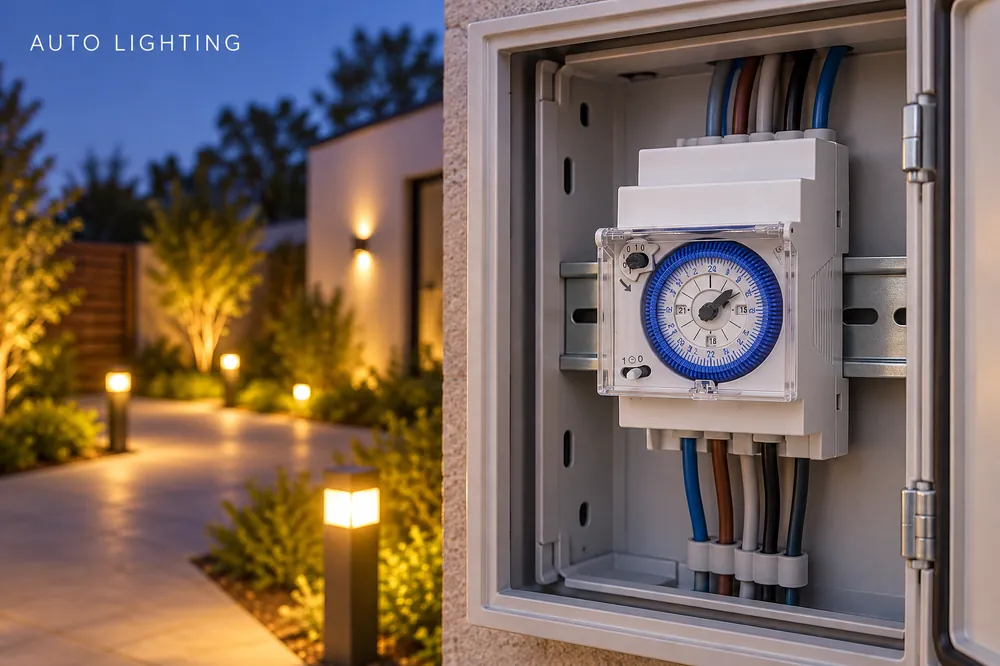
Do you forget to turn off your outdoor lights? Wasting power costs money and ruins devices. A mechanical timer switch can fix this daily problem for you easily.
A mechanical timer switch is used to automatically turn electrical devices on or off at preset times. You set a dial and push down small pins. It controls daily repeating tasks for lights, pumps, and fans. This saves energy and stops manual work.
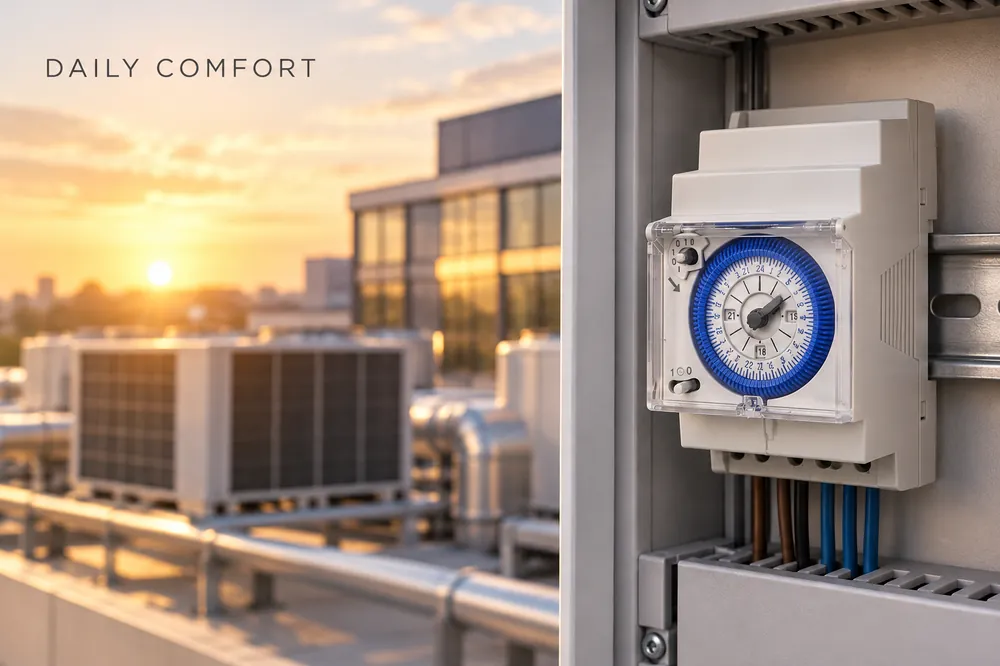
Many people think they need a complex smart home system to automate their devices today. But how exactly does this simple tool fit into your business or home? Keep reading to see why this basic device is still the best choice for many tasks.
How Does a Mechanical Timer Switch Work?
Are you confused by digital screens and apps? Setting up complex smart devices takes time. A mechanical timer uses a physical dial, making setup fast and clear.
A mechanical timer switch works using a small motor and a rotating dial. You push down small pins on the dial to set the "on" time. When the dial turns and hits a pushed pin, the switch turns the power on. It is very easy to use.
The Basic Parts
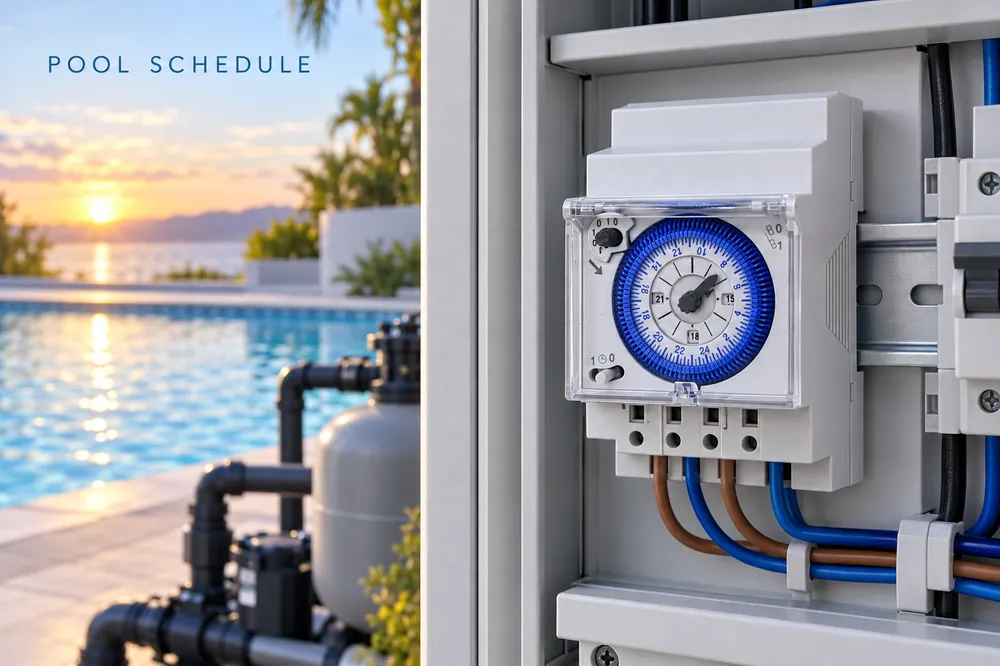
A mechanical timer switch has a very simple structure. It does not have a computer chip. It has a small motor inside. This motor turns a dial. The dial looks like a clock face. It has 24 hours marked on it. Around the dial, there are many small plastic pins. Each pin usually stands for 15 minutes or 30 minutes.
How to Set It Up
You do not need an app or a phone. You just look at the dial. First, you turn the dial to the current time. Then, you find the time you want your device to turn on. You push the pins down for that time period. For example, if you want lights on from 6 PM to 10 PM, you push down all the pins between those numbers.
Why This Simple Design Wins
At Timebest, we make many timer switches. We see that many users just want something simple. They do not want to learn new software. A mechanical dial gives you a clear visual plan. You can see your whole day at one glance.
| Feature | Description | Benefit |
|---|---|---|
| Dial Face | 24-hour clock layout | Easy to read and understand |
| Time Pins | Push down to set "On" time | Fast setup without tools |
| Manual Switch | Override button | Turn on or off anytime if needed |
This simple design makes the switch very cheap and strong. It does not break easily. It handles simple daily tasks perfectly.
Why Use a Mechanical Timer Switch for Lighting?
Do your shop lights stay on all night? Paying for extra power hurts your business. A mechanical timer stops this waste by turning lights off on time.
A mechanical timer switch is perfect for lighting control. It automatically manages garden lights, street lamps, and shop window displays. You set the daily schedule once. Then, the timer turns the lights on at night and off in the morning, saving you energy and money every day.
Common Lighting Uses
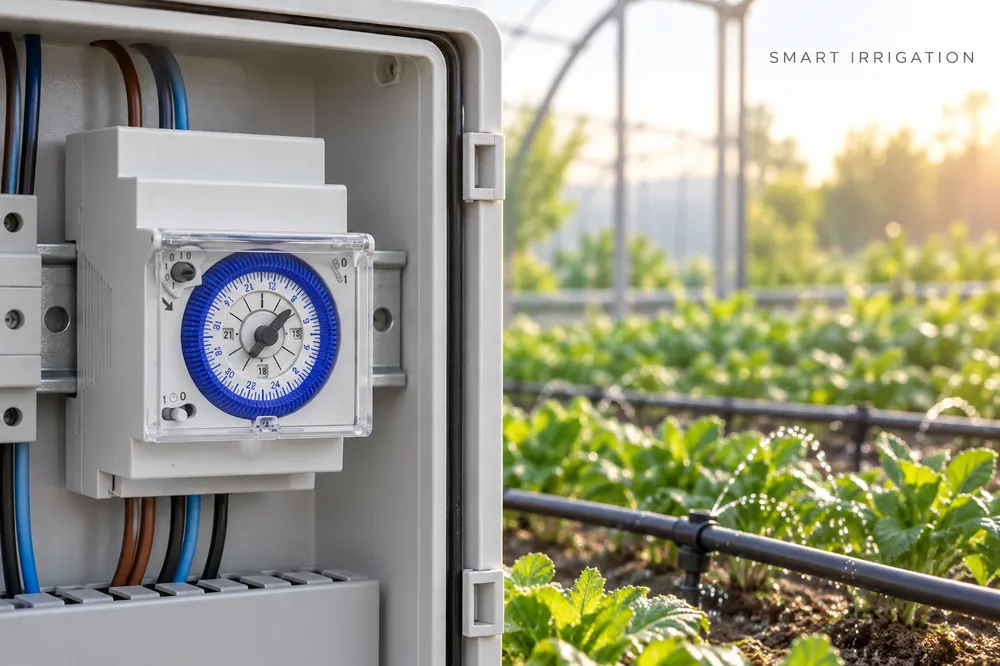
Lighting is the most common use for our timer switches. Think about a big shop. The shop has a large window display. The owner wants the lights on from 7 PM to 11 PM to show products to people walking by. But the owner goes home at 6 PM. A mechanical timer does this job. It turns the window lights on and off every day.
Outdoor and Street Lights
Garden lights and street lights also need fixed schedules. They need to turn on when it gets dark. They need to turn off when the sun comes up. A mechanical timer is great for this. You just set it to run every single night. You do not need to walk outside in the cold to flip a switch.
Business Signage
Many of our wholesale clients buy timers for billboards. A bright billboard uses a lot of power. If it stays on at 3 AM when no one is driving, you waste money.
| Lighting Type | Typical "On" Time | Purpose |
|---|---|---|
| Shop Windows | 6 PM to 12 AM | Show products to evening walkers |
| Garden Lights | 7 PM to 6 AM | Keep homes safe at night |
| Billboards | 6 PM to 1 AM | Catch drivers' attention |
A mechanical timer cuts this waste. It gives a low-cost way to manage lights for any business or home.
Can It Control Water and Air Systems?
Does your pool pump run all day? Running water and air systems too long damages machines. A timer switch runs them only when you need them.
Yes, a mechanical timer switch easily controls water and air systems. It is very useful for garden irrigation, pool pumps, and aquarium filters. It can also manage exhaust fans and HVAC units. It runs these machines on a fixed daily loop, saving power and protecting the equipment.
Irrigation and Watering
Plants need water, but they do not need water all day. A mechanical timer is a great tool for a garden watering system. You can set the timer to turn on the water pump at 6 AM for 30 minutes. This gives your plants a drink before the sun gets too hot. The timer repeats this every day. You do not have to wake up early.
Pool and Aquarium Pumps
Swimming pools need water filters. Fish tanks need water pumps. But running them 24 hours a day is often too much. A timer can run the pool pump for 4 hours in the morning and 4 hours at night. This keeps the water clean. It also cuts your electric bill.
Ventilation and Heating
Air systems also need control. Some factories need exhaust fans to clear the air. But they only need them during work hours.
| System | Timer Schedule Example | Main Benefit |
|---|---|---|
| Garden Water | 6:00 AM to 6:30 AM | Saves water and helps plants grow |
| Pool Filter | 8:00 AM to 12:00 PM | Keeps water clean and saves power |
| Exhaust Fan | 9:00 AM to 5:00 PM | Clears air only during work hours |
At Timebest, we see many engineering clients use our timers for these tasks. The mechanical timer is strong enough to handle motor loads safely. It makes daily machine control very simple.
Why Choose a DIN Rail Mechanical Timer?
Are you building a commercial power box? Messy wires cause safety risks. A DIN rail mechanical timer fits neatly inside a control cabinet for safe and easy management.
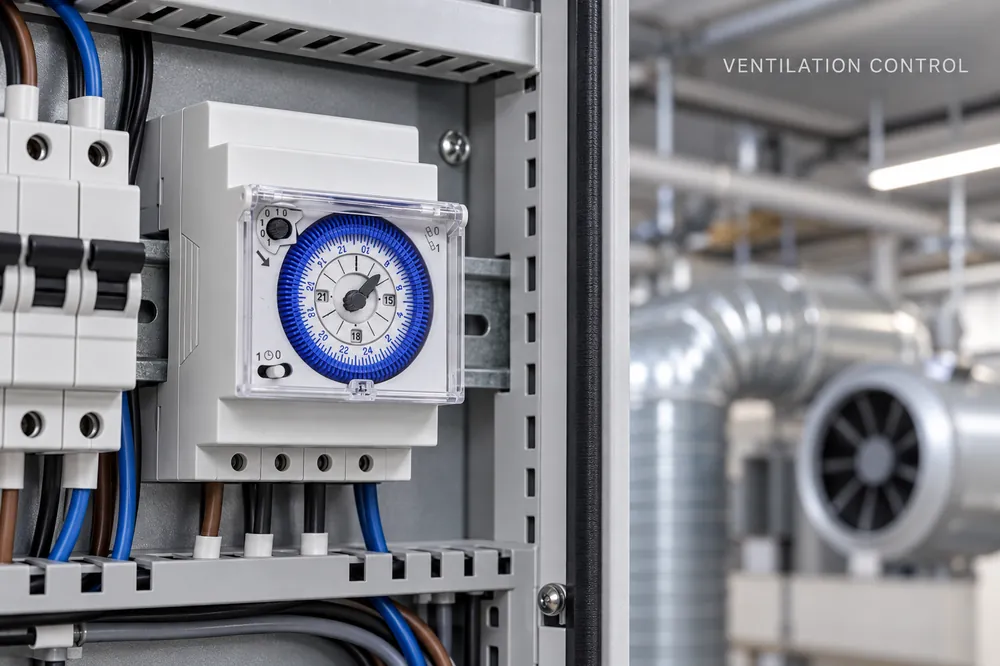
A DIN rail mechanical timer is designed to mount inside a distribution box. It is perfect for commercial lighting, factory ventilation, and big irrigation systems. It provides a clean, safe, and reliable way to automate fixed circuits in professional buildings and engineering projects.
What is a DIN Rail Timer?
Not all timers plug into a wall socket. Some timers are built for control boxes. We call these DIN rail mechanical timers. They have a special shape. They clip onto a metal rail inside a breaker box. This keeps all the wires hidden and safe.
Perfect for Commercial Use
Many of our wholesale clients buy DIN rail timers for big projects. A normal home plug timer is too small for a factory. A DIN rail timer wires directly into the main power lines. It can control a whole floor of lights. It can control a large heating system.
Reliable Daily Automation
In a factory or an office building, things happen at the same time every day. Workers arrive at 8 AM. They leave at 6 PM. The DIN rail timer controls the lights and fans based on this fixed rule.
| Feature of DIN Rail Timer | Why It Matters for Business |
|---|---|
| Hidden Installation | Keeps wires away from people |
| Direct Wiring | Handles bigger power loads safely |
| Fixed Position | No one can easily unplug it |
I think this is the best tool for simple daily loops. You install it once. You set the dial. Then, you close the box. The timer will do its job every day without any human help. It is very reliable.
Is a Mechanical Timer Better Than a Smart Switch?
Are smart switches too expensive and hard to fix? Wi-Fi drops and app updates cause headaches. A mechanical timer never loses connection and costs much less.
A mechanical timer is better for simple, repeating daily tasks. It does not need Wi-Fi, apps, or passwords. While smart switches offer complex weekly plans or minute-by-minute control, mechanical timers are cheaper, easier to set up, and very stable. They just work, day after day.
When to Use Smart Switches
We make smart switches at Timebest too. Smart switches are great for some things. If you need a different schedule for every day of the week, use a smart switch. If you want to turn on your heater from your car using your phone, you need a smart switch. Smart switches are good for complex needs.
The Power of Simplicity
But I believe mechanical timers are still very useful. They are not old or bad. They are just made for a different job. Most people do not need complex schedules. They just want their porch light on at night. A mechanical timer does this perfectly.
Cost and Maintenance
A mechanical timer costs less to buy. It also costs less to keep running. If the internet goes down, a smart switch might fail. A mechanical timer does not care about the internet. It just keeps ticking.
| Need | Mechanical Timer | Smart Switch |
|---|---|---|
| Daily Fixed Rule | Yes, very easy | Yes, but takes more setup |
| Phone Control | No | Yes |
| No Wi-Fi Needed | Yes | No |
| Price | Low | High |
If your task is simple and repeats every day, the mechanical timer is the winner. It is a very practical automation tool. It saves money and reduces stress.
Conclusion
A mechanical timer switch is a simple, low-cost tool for daily automation. It turns lights, pumps, and fans on and off reliably, saving you energy without complex setup.
<!--[googlesitekit-end-of-content]-->