
How to Test if a Voltage Protector is Working Correctly
Are you unsure if your voltage protector actually works? A faulty device leaves your expensive appliances open to power surges. Here is how you can test it properly.
To test if a voltage protector is working correctly, check its status lights and delay timer first. Next, compare its voltage display against a reliable multimeter. Finally, use an adjustable power supply to simulate high and low voltage conditions to confirm it cuts off and restores power properly.
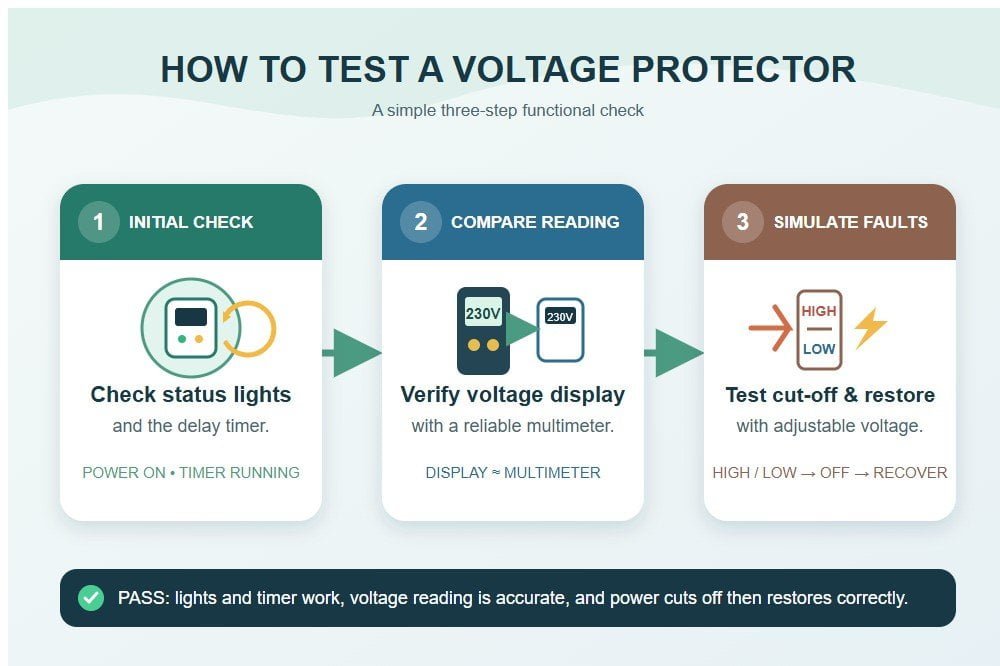
Many people think a green light means everything is perfectly safe. However, as a manufacturer, I know that real protection goes much deeper than a simple light. We cannot just plug it in and hope for the best. Let us break down the exact steps to test these devices.
How Do You Perform the Initial Visual and Functional Checks?
Are you skipping the basic steps? Rushing into hard tests can make you miss simple faults. Start with an easy visual and functional check to save your time.
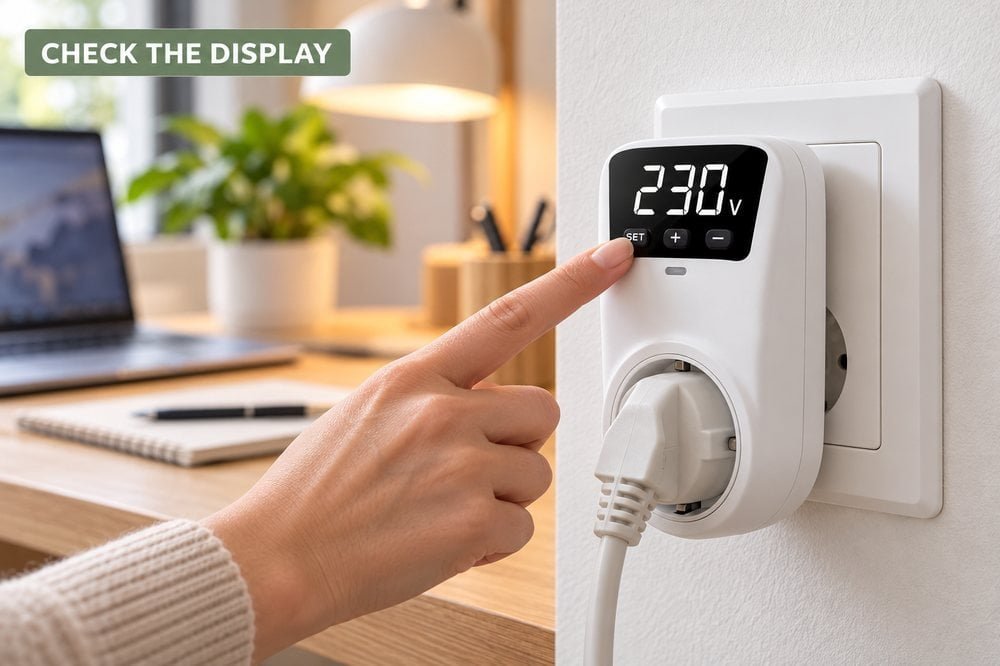
Plug the voltage protector into a standard wall socket. Look at the digital voltage display, check if the status lights turn on, and verify that the start delay holds the power back before letting it flow to the appliance.
Why the Start Delay Function Matters
When I first started working in this industry, many clients asked me about the delay function. They thought a delay meant the device was broken. I always tell them the delay is a very important feature. When you plug in the device, it should not give power to the appliance right away. It needs to check the power first. If the power is stable, it starts to count down. We call this the start delay.
We make many protectors in our factory. We always test this part. The delay protects the appliance from the first power spike. This spike happens when you push the plug into the wall.
Here is a table to show what you should look for during the first check:
| Check Item | What to Look For | Why It Matters |
|---|---|---|
| Digital Display | Numbers turn on clearly | Shows the current power level |
| Status Lights | Red or green lights show the mode | Tells you if the device is waiting or working |
| Start Delay | Power does not flow right away | Stops initial power spikes |
Therefore, you must always do this basic check first. It is the easiest way to see if the device is completely dead or ready for the next test.
How Do You Verify the Accuracy of the Voltage Display?
Do you trust the numbers on the screen? Wrong readings mean the device might protect your items at the wrong time. You must check the display accuracy.
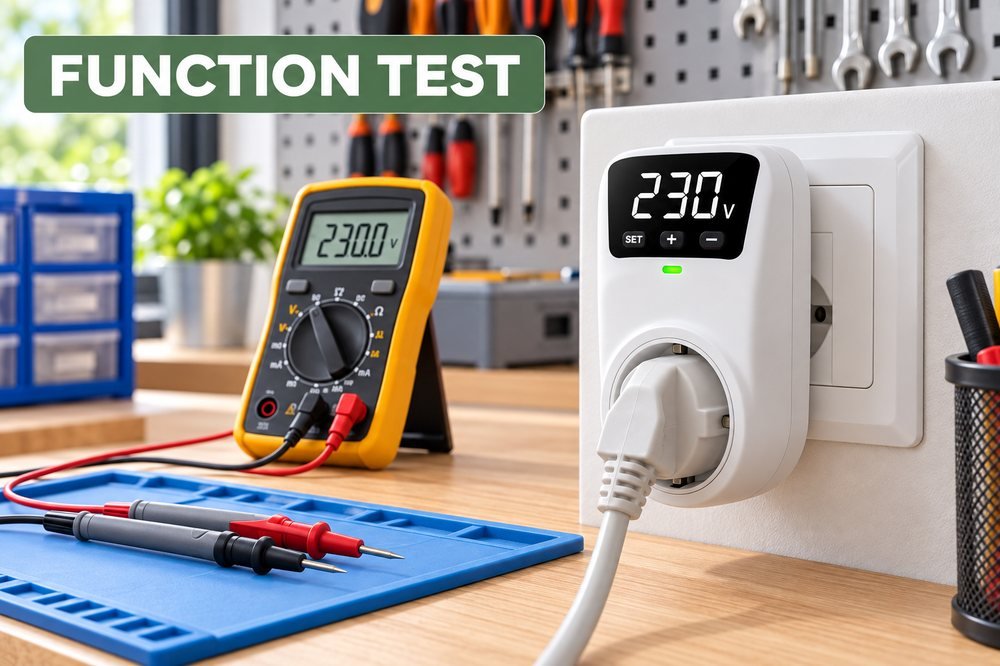
You can verify the accuracy by using a good multimeter. Measure the actual voltage of the wall socket and compare it to the number on the protector screen. The readings should match closely and stay within the stated error margin.
The Importance of True Voltage Readings
You cannot manage what you cannot measure. I learned this rule early in my business. If the protector thinks the voltage is 220V, but it is actually 240V, you have a big problem. The device will not cut the power when it should. This is why we test display accuracy in our factory every single day.
To do this test, you need a good tool. We use professional multimeters. You can use a basic one, but make sure it works well. Measure the wall socket power. Write down the number. Next, look at the protector screen. Compare the two numbers.
They will rarely be exactly the same. That is normal. However, the difference must be very small. We call this the error margin.
Here is a simple table to explain the error margin:
| Actual Wall Voltage | Protector Display | Difference | Result |
|---|---|---|---|
| 220V | 221V | 1V | Pass (Good accuracy) |
| 220V | 215V | 5V | Fail (Too low) |
| 220V | 228V | 8V | Fail (Too high) |
If the error is too big, the protector is useless. It will give you a false sense of safety. Always check the numbers to be sure.
How Do You Test the Over-Voltage and Under-Voltage Cutoff?
Will it actually stop a power surge? If it fails during a real surge, your appliances will burn. You need to simulate extreme voltage conditions.
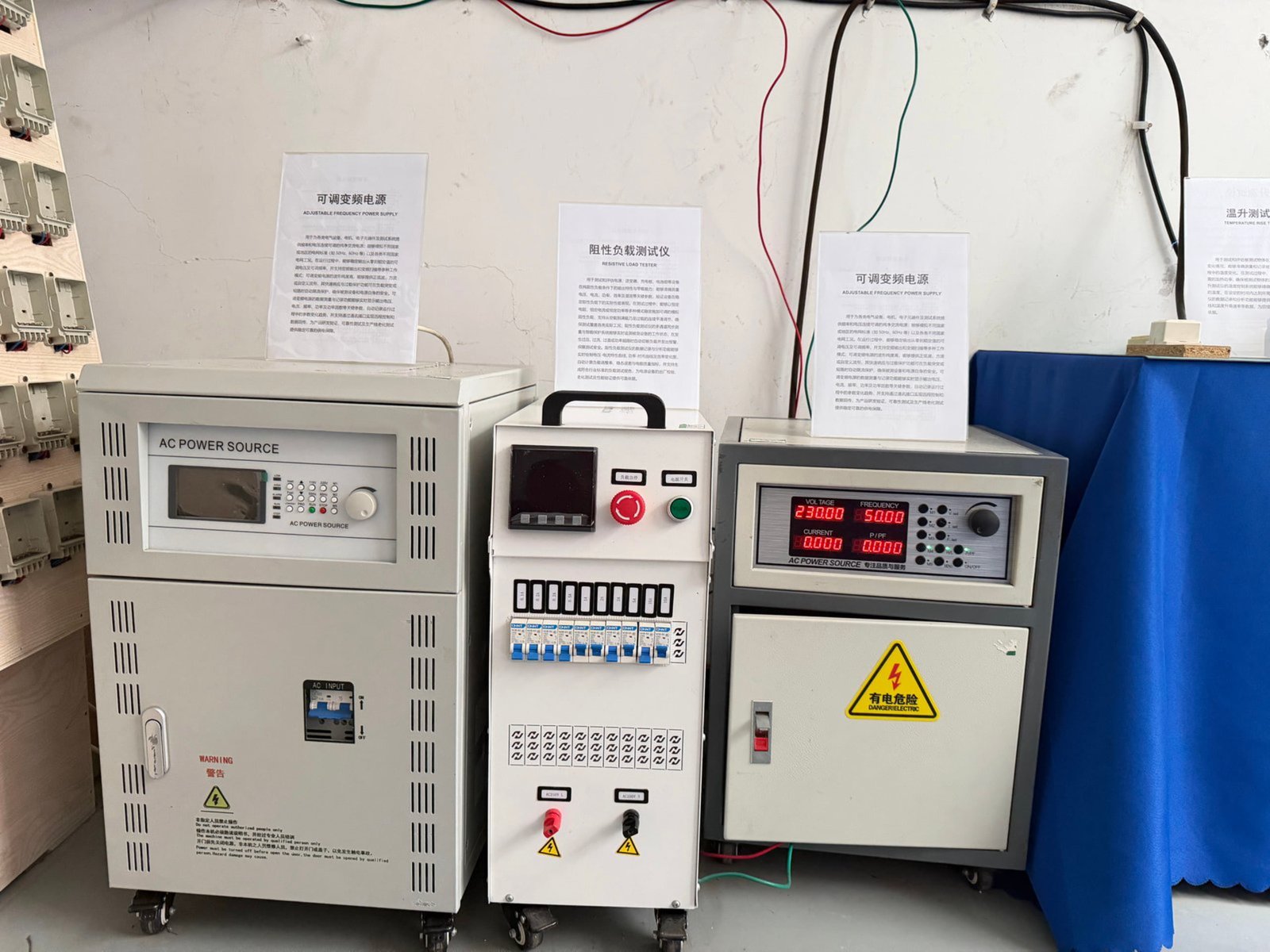
Use a professional adjustable power supply to safely raise and lower the voltage. Watch the protector closely. It must cut off the output power immediately when the voltage crosses the high or low safety limits set by the device.
Simulating Real Power Problems
In our testing lab, we do not wait for a storm to test our products. We create the storm. To truly test a voltage protector, you must simulate bad power. You cannot do this with a normal wall socket. You need an adjustable power supply.
I always tell my B2B clients that the cutoff action is the core part of the product. When the power goes too high, the protector must act fast. If it waits too long, the appliance will burn. The same rule applies to low power. Low power makes motors work too hard. They get hot and break.
We test both sides. We turn the dial up to simulate a surge. We turn the dial down to simulate a drop.
Here is a table showing the test process:
| Simulation Type | Action Taken | Expected Protector Response |
|---|---|---|
| Normal Power | Set power to 220V | Device stays on, power flows |
| Over-Voltage | Turn power up to 260V | Device cuts power instantly |
| Under-Voltage | Turn power down to 170V | Device cuts power instantly |
This test shows if the internal relay works. The relay is the physical switch inside. If you hear a small "click" when the power goes out of range, the relay is doing its job.
Why Is the Power Recovery Logic Just as Important as the Cutoff?
Does the power come back on too quickly? Fast power cycles can destroy refrigerator compressors. The recovery delay is a very critical protection feature.
After the voltage returns to a safe level, the protector must not restore power instantly. It should wait for a pre-set delay time, usually a few minutes. This delay protects compressor-based appliances from the damage caused by rapid power changes.
Protecting Compressors with Delay Logic
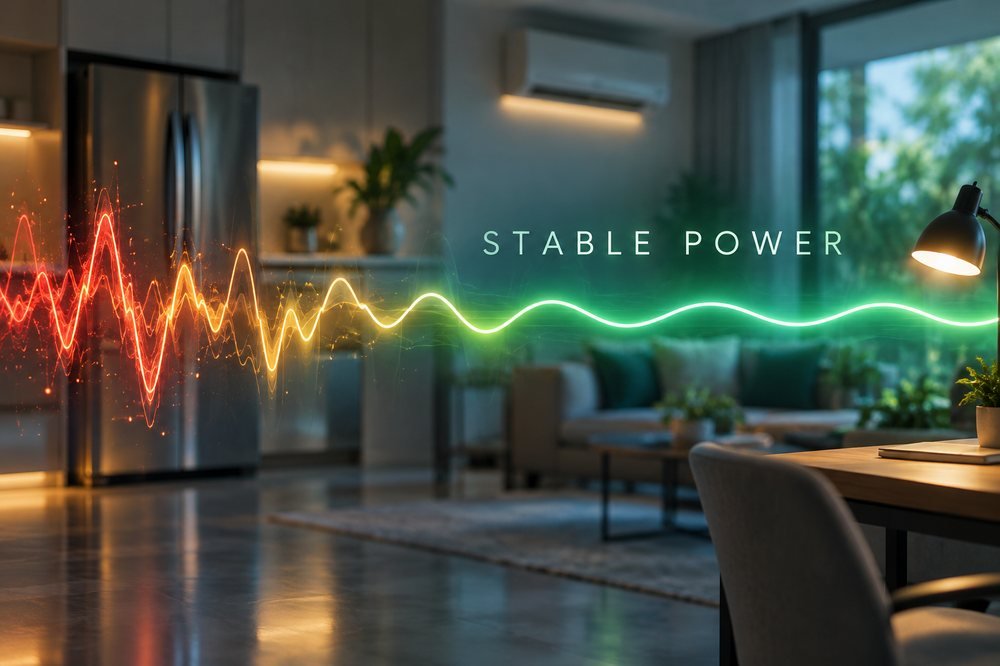
Many people focus only on the power cutoff. However, I believe the recovery logic is just as important. Think about a refrigerator. It has a compressor inside. If the power cuts off and comes right back, the compressor tries to start against high pressure. This fast action can destroy the motor.
I have seen many cheap protectors fail because they do not have a good recovery delay. When the power comes back to normal, the protector must wait. It should wait for three to five minutes. This wait gives the pressure inside the compressor time to drop.
In our custom OEM projects, clients often ask us to set different delay times. A TV does not need a long delay. A fridge needs a long delay.
Here is a table to explain the recovery logic:
| Appliance Type | Recommended Delay | Reason |
|---|---|---|
| TV or Computer | 5 to 10 seconds | No moving parts, fast start is okay |
| Refrigerator | 3 to 5 minutes | Compressor needs time to lose pressure |
| Air Conditioner | 3 to 5 minutes | Same as fridge, needs pressure drop |
A good protector checks the power while it waits. If the power goes bad again during the wait, the timer must start over. This smart logic keeps your most expensive home appliances safe.
Conclusion
Testing a voltage protector requires checking display accuracy, cutoff actions, and recovery logic. Proper testing ensures your appliances stay safe and proves the true reliability of the manufacturer.
<!--[googlesitekit-end-of-content]-->