
Which type is better, mechanical OR digital timer sockets?
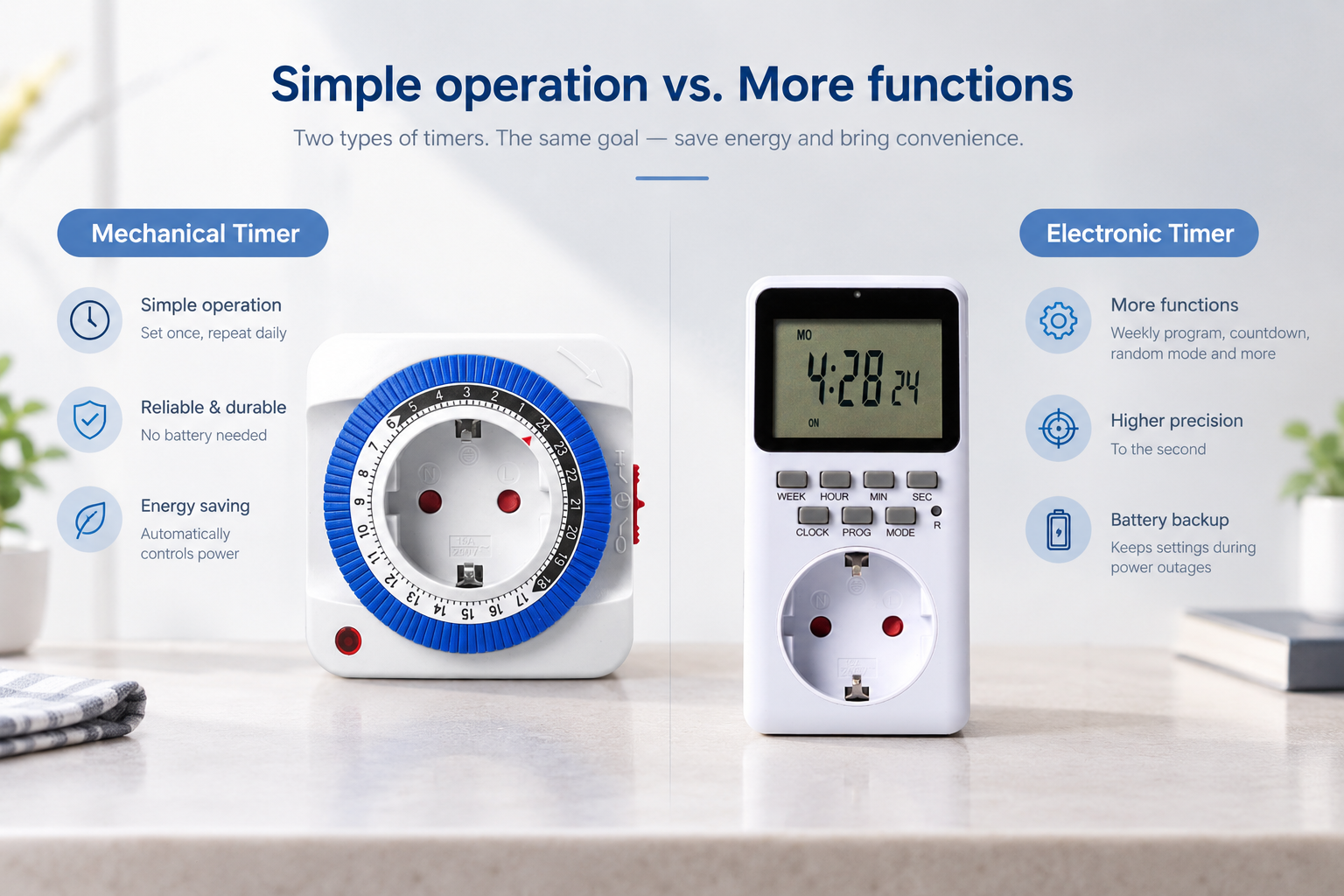
Many buyers struggle to choose between mechanical and digital timer sockets. Choosing the wrong type wastes money and frustrates users. Let us find the right fit for your business.
Neither type is absolutely better. Mechanical timer sockets are best for simple, repeating tasks. Digital timer sockets are better for complex, highly precise tasks. The best choice depends entirely on your specific application needs and value, not just the price.
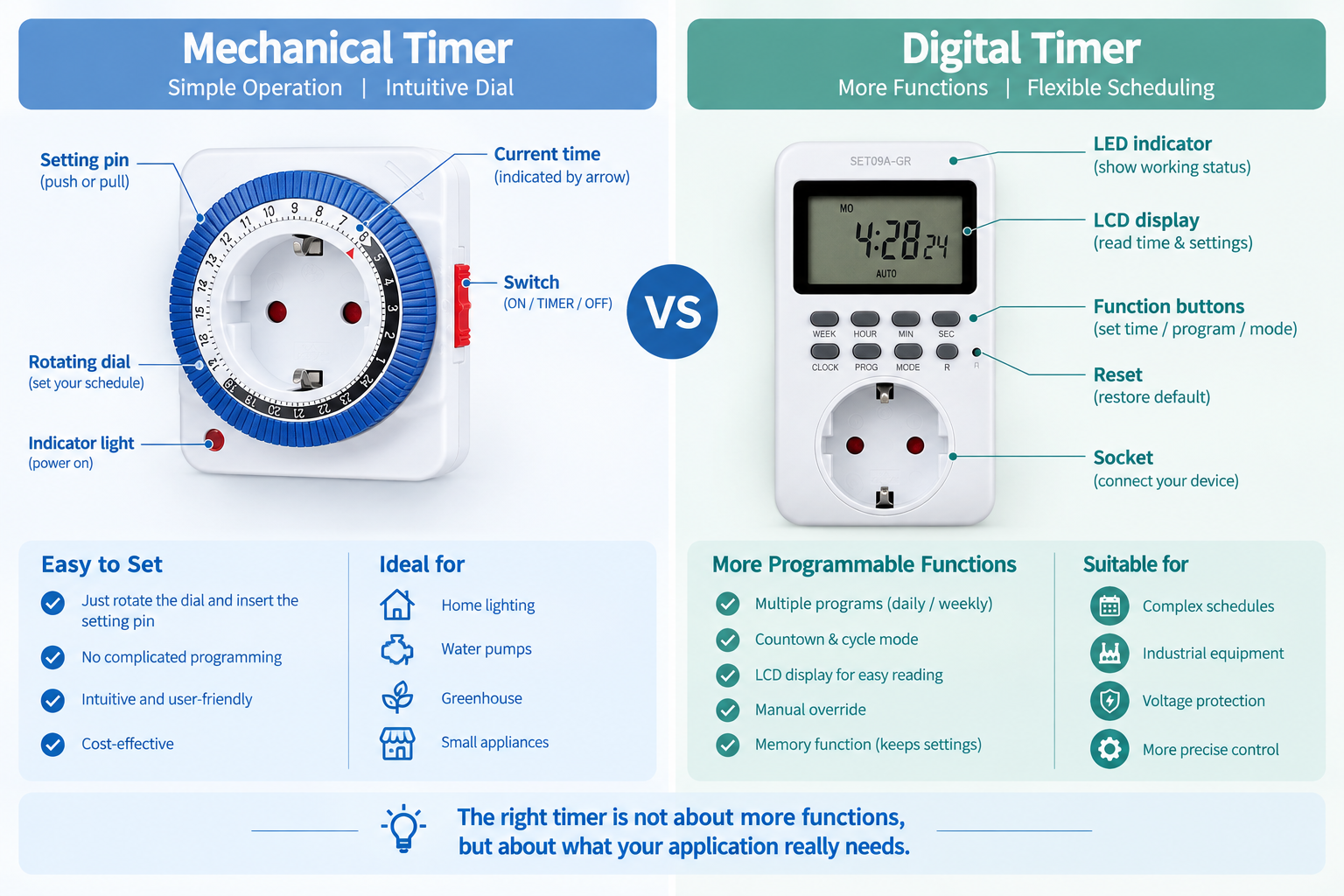
You might think that buying the most advanced timer is the safest bet. However, this common mistake can hurt your sales and profit margins. Let us look closer at how to make the best purchasing decision for your market.
Are more functions always better?
Buyers often look for timers with the most features. But paying for unused features lowers your profit. How do you avoid this trap?
More functions do not mean a better product. You should match the product functions directly to what your target users actually do every day. Simple needs require simple products to create real value.
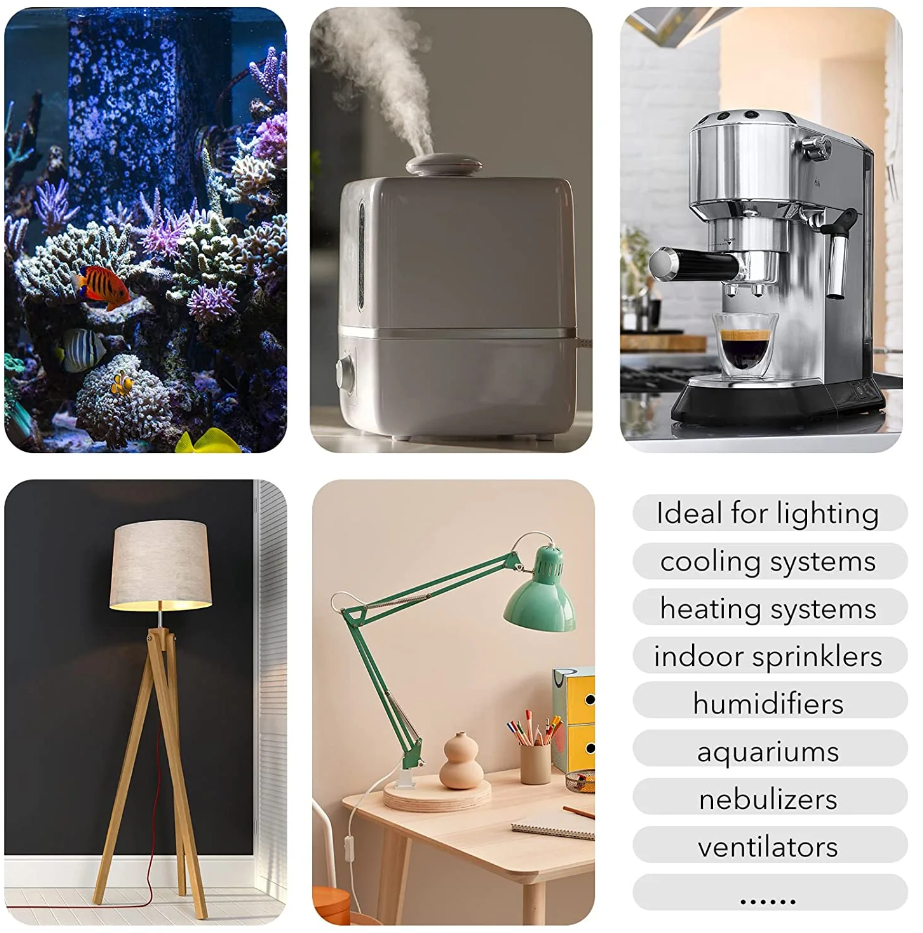
When I talk to wholesale clients, they often compare the feature lists of different products. They think a longer list means a better product. This is not true. We need to look at the real value. A product has value when it perfectly matches the user's need.
The trap of extra features
If your customer only wants to turn on a light at night, they do not need a timer that can set 20 different programs. They just need a simple tool. When you sell a complex digital timer for a simple task, the user gets confused. The learning cost is too high. This leads to bad reviews for your brand.
Value versus Price
People always notice that mechanical timers are cheaper and digital timers are more expensive. But we must use value as the standard. Do not just look at the price tag.
| Feature Comparison | Mechanical Timer | Digital Timer |
|---|---|---|
| Setup Method | Physical dial or pins | Buttons and screen |
| Learning Cost | Very low | Needs a manual |
| Core Value | Simple and direct | Flexible and complex |
| Program Groups | Multiple in one day | Up to 28 groups across different days |
If the application does not need complex functions, adding them brings no real value. It only increases your purchase cost. As a factory, we can customize both types, but we always advise clients to buy what fits the end user.
Is simplicity a kind of value?
Complex screens and buttons can confuse users. This leads to returns and customer complaints. Is there a better way to serve them?
Simplicity is a huge value. Mechanical timers use physical dials. Anyone can understand them instantly without reading a manual. For fixed daily tasks, this simple operation saves time and reduces errors.
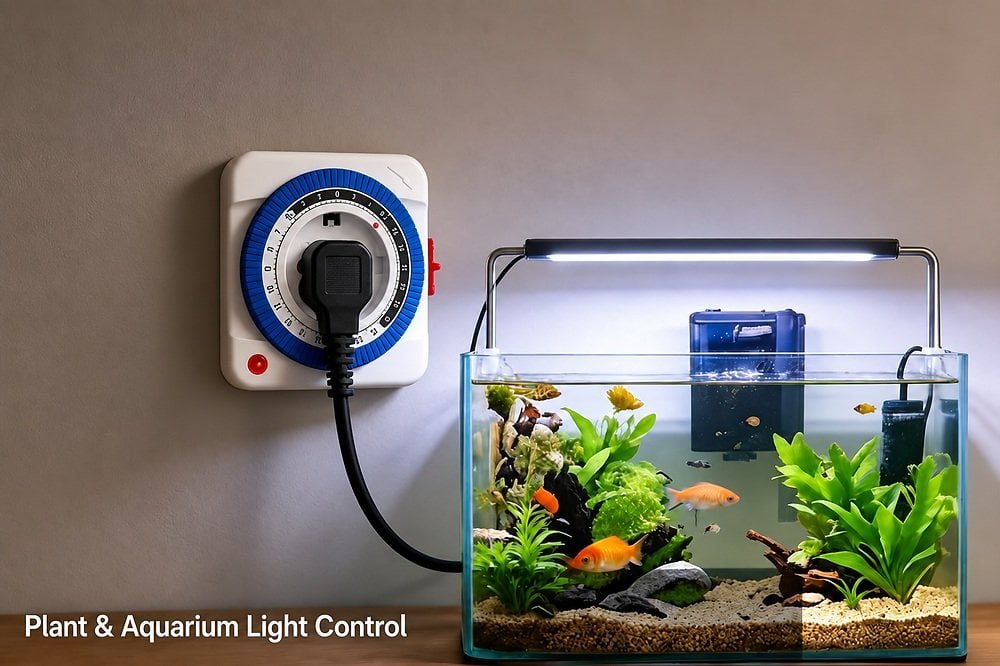
I always tell my brand purchasers not to underestimate simple products. Simplicity means reliability. It means fewer things can go wrong. This is very important for building a strong local electrical brand.
The power of physical setup
Mechanical timers use push pins around a dial. You push a pin down, and the power turns on for that time block. You pull it up, and the power stays off. This visual setup is incredibly easy to understand. Users can see the whole daily schedule at one glance. They do not need to press buttons to check their settings.
Best applications for simple timers
For many home appliances, the schedule never changes. The user wants the device to turn on at 8 AM and off at 6 PM every single day. They want a "set and forget" experience.
| Application Need | Mechanical Timer | Digital Timer |
|---|---|---|
| Fixed daily schedule | Perfect match | Functions are wasted |
| Easy visual check | Very clear | Must press buttons |
| Quick adjustment | Just turn the dial | Reprogram via buttons |
| User group | Good for all ages | Hard for older users |
When you offer a simple mechanical timer for these tasks, your customers are happy. They get a low-cost, easy-to-use solution that solves their problem perfectly.
How much precision does your application really need?
A timer that is off by a few minutes can ruin sensitive tasks. This causes big problems for your end users. How precise should your timer be?
Precision depends on the task. Mechanical timers have a minimum setting of 15 minutes. Digital timers can be set to the exact second. You must choose based on the strictness of the application.
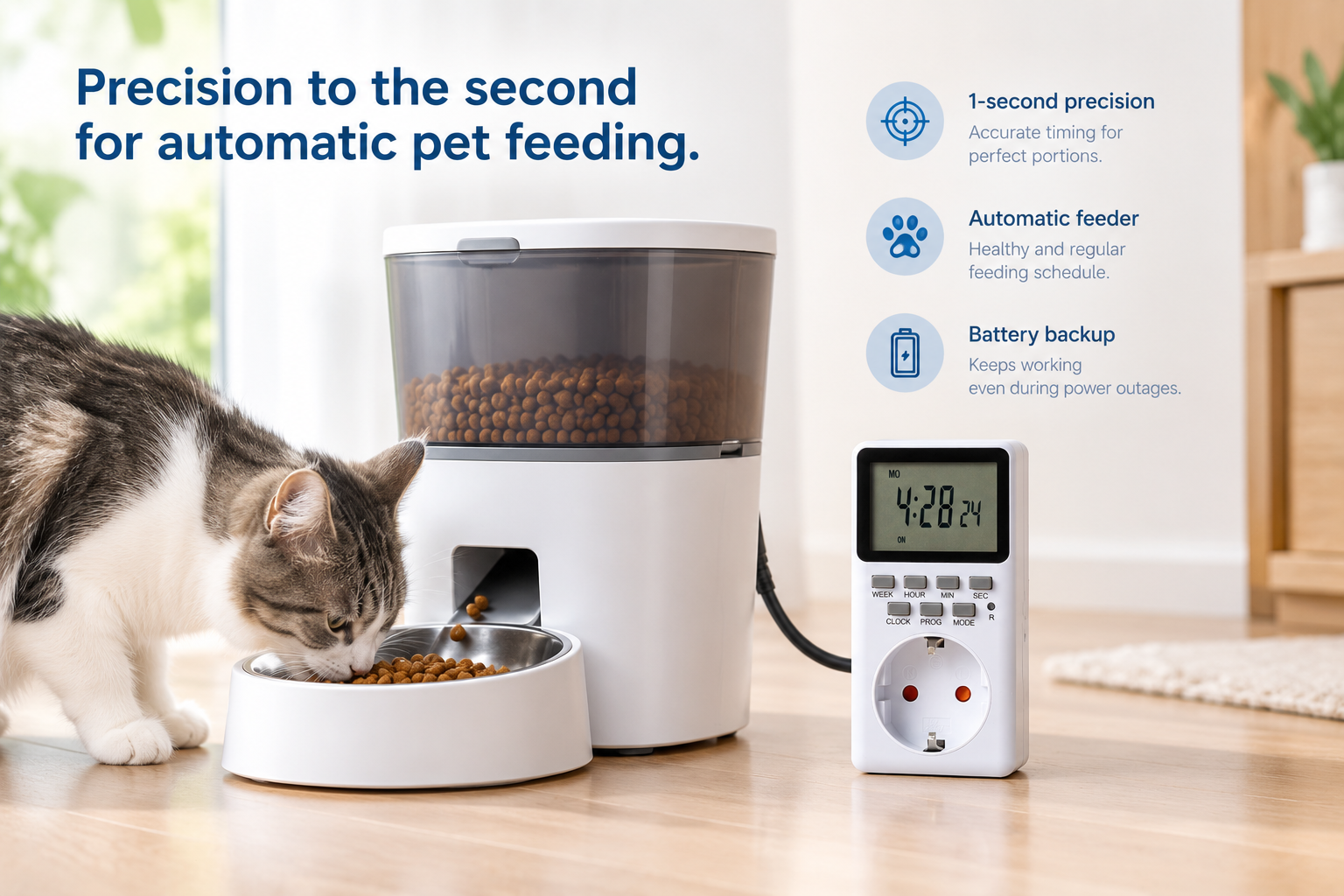
Many buyers only ask me how many program groups a digital timer has. They often ignore a much more important detail. That detail is the minimum setting unit. Is it minutes, or is it seconds? This changes everything for certain buyers.
When minutes are not enough
In some applications, a small time difference is a big deal. If you are controlling a garden light, a 15-minute difference does not matter. But think about an automatic fish feeder or a chemical pump. These devices need exact timing.
The automatic feeding example
If an automatic feeder runs for one extra second, it might drop too much food into the water. This can harm the fish and waste money. In this case, a mechanical timer is completely useless. You need a digital timer that controls time down to the exact second.
| Precision Level | Mechanical Timer | Digital Timer |
|---|---|---|
| Minimum Unit | 15 or 30 minutes | 1 minute or 1 second |
| High Precision Tasks | Not suitable | Highly advantageous |
| Output Control | Rough control | Exact control |
| Typical Use | Lighting, heating | Automation, feeding |
Therefore, you must ask what kind of time control the application needs. When the output amount depends directly on the running time, you must buy digital timers.
Are the product limitations really your problem?
Power outages can erase timer settings. This ruins the user experience when the power returns. How do different timers handle this issue?
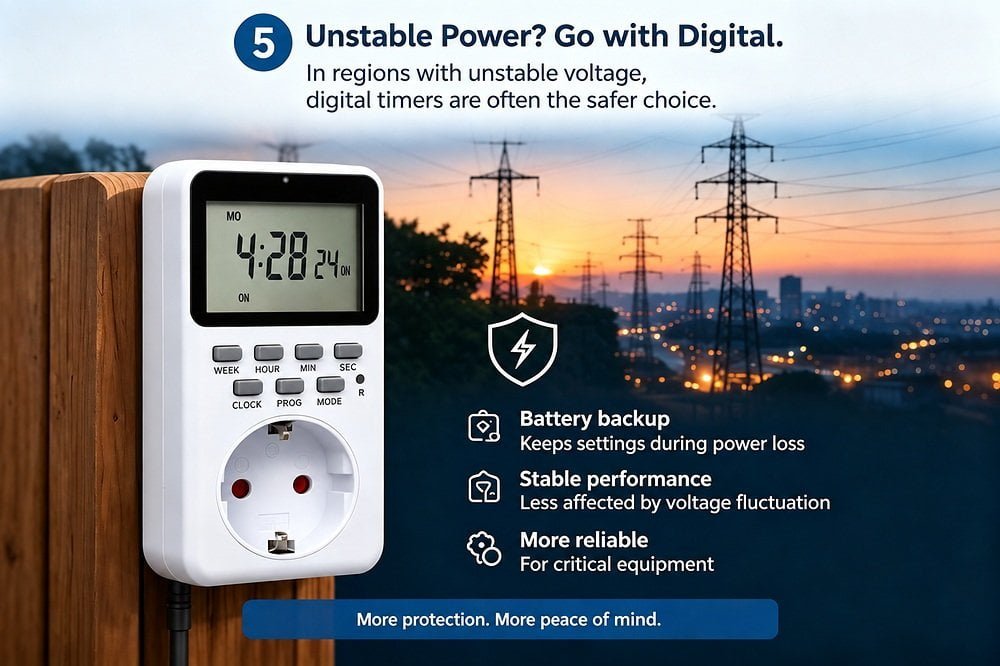
Mechanical timers stop during power cuts, so the time becomes wrong.1 Digital timers have built-in rechargeable batteries.2 They keep the time and memory during a power cut, requiring no manual reset.
Every product has limits. But a limit is only a problem if it affects your specific user. Let us look at the power outage issue. This is a common problem in many developing regions or rural areas.
The memory difference
When a house loses power, a mechanical timer stops ticking. If the power is off for two hours, the timer will be two hours late. The user must remember to turn the dial to the correct current time. For some users, this manual fix is very annoying. If they forget, their lights will turn on at the wrong time.
Built-in battery solutions
Digital timers solve this problem easily. They contain a small Ni-MH rechargeable battery. When the power cuts, the screen stays on. The internal clock keeps running. When the power comes back, the programs run exactly as planned.
| Power Outage Handling | Mechanical Timer | Digital Timer |
|---|---|---|
| Time keeping | Stops running | Keeps running |
| Program memory | Stays physical | Remembers settings |
| User action needed | Must adjust time | No action needed |
| Best for unstable grids | Poor choice | Excellent choice |
If your target market has frequent power cuts, the mechanical timer's limit becomes a real problem. In that market, the digital timer is clearly the better choice to keep your customers happy.
Why do different markets choose different timers?
Selling the wrong timer to a specific region will result in poor sales. Market habits vary greatly. Why do buyers in different countries prefer different styles?
Different markets have different dominant applications. Israel buyers prefer mechanical timers for simple water boilers. Brazil buyers often choose digital timers for precise agricultural tasks. You must understand local daily habits.
As a manufacturer, I see order data from all over the world. I notice clear patterns in our export data. The choice between mechanical and digital is rarely about technology. It is about local lifestyle and common daily applications.
The Israel Market Example
In Israel, many homes use electric water boilers. They only need the boiler to heat water before they wake up and before they come home. This is a fixed, repeating schedule. A mechanical timer does this perfectly. It is cheap and reliable. Adding a digital screen brings no extra value here.
The Brazil Market Example
In Brazil, we see more demand for digital timers in certain sectors. Customers use them for equipment automation and precise feeding systems. These tasks need complex schedules. They might need different times on weekends.
| Market Example | Main Application | Preferred Timer Type |
|---|---|---|
| Israel | Water boilers | Mechanical |
| Brazil | Automation/Feeding | Digital |
| Europe | DIY Home Security | Both types |
| Middle East | Air conditioning | Mechanical mostly |
You must study your local buyers. Find out what devices they plug into the timers. Then, buy the timer that matches those specific devices. We can help you build a channel-ready product package based on this data.
Have you ignored the operating environment?
A timer might work perfectly in a lab but fail in a real home. Environmental factors cause breakdowns. How does the environment affect your choice?
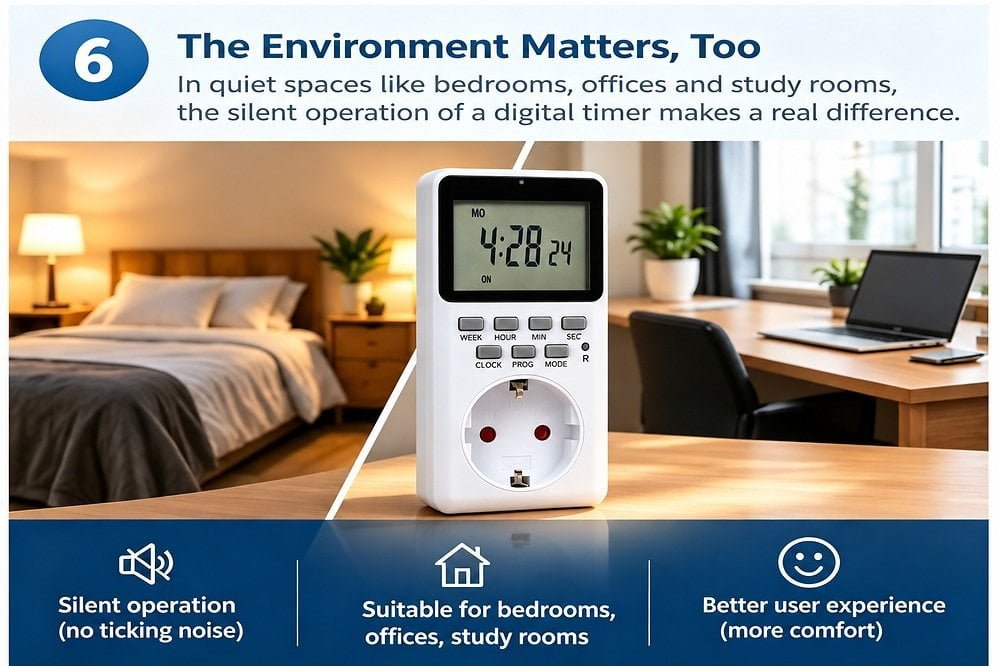
Mechanical timers have simple structures and are very robust. Digital timers require more care regarding humidity. Also, mechanical timers make a slight ticking noise, while digital timers are completely silent.
Many buyers look at functions and price, but they forget where the timer will live. The physical environment plays a big role in the product's life and user satisfaction. In our factory, we use thermostatic test chambers to check this.
Noise levels in bedrooms
Mechanical timers have a small motor inside. As the dial turns, it makes a very quiet ticking sound. In a noisy garage, no one hears it. But in a quiet bedroom at night, this sound can bother sensitive sleepers. Digital timers are 100% silent. They are perfect for bedrooms and living rooms.
Long-term durability
We also need to think about long-term use. The two types age differently based on where you put them.
| Environment Factor | Mechanical Timer | Digital Timer |
|---|---|---|
| Noise level | Slight ticking noise | Completely silent |
| Internal structure | Simple parts | Electronic parts |
| Storage needs | Standard | Needs care against dampness |
| Room placement | Garage, basement | Bedroom, living room |
If your customer wants to use the timer in a dusty workshop for a simple tool, the mechanical timer is very tough. If they want silent operation in a smart home setup, you must provide the digital timer. Always match the product to the room.
Conclusion
A timer should be judged by how well it matches the application. Switch your thinking from comparing types to matching needs and functions for better purchasing decisions.
"Power outages and community health: a narrative review - PMC", https://pmc.ncbi.nlm.nih.gov/articles/PMC7749027/. It is documented that mechanical timers lose time during power outages, which can lead to user inconvenience. Evidence role: statistic; source type: government. Supports: Mechanical timers stop during power cuts, so the time becomes wrong.. Scope note: The statistic may not be specific to timer sockets but applies to mechanical timers in general. ↩
"Replacing batteries in digital timers? - Facebook", https://www.facebook.com/groups/1551543558710371/posts/2133395493858505/. Digital timers are often equipped with rechargeable batteries to maintain functionality during power outages, ensuring user convenience. Evidence role: definition; source type: education. Supports: Digital timers have built-in rechargeable batteries.. Scope note: The definition may not cover all types of digital timers but is generally applicable. ↩