
Why and how does a voltage protector work to safeguard electronics?
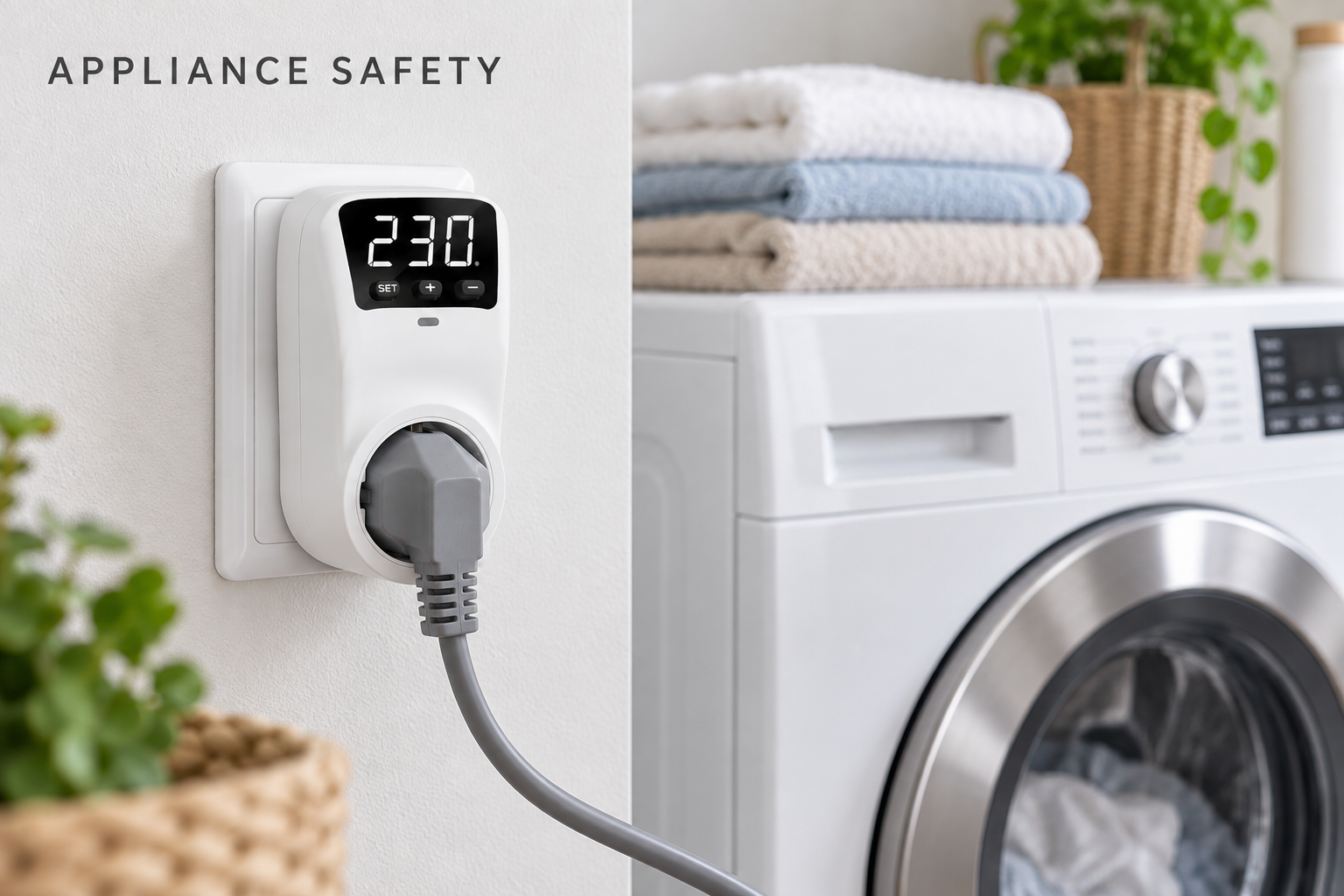
Power issues can quietly ruin expensive electronics. You might think appliances just turn off and on during an outage. But this hidden damage costs money and shortens product life.
A voltage protector works by constantly checking the incoming power. If the voltage goes too high or too low, it cuts the power. When the voltage becomes safe again, it restores power. This blocks bad electricity from reaching and breaking your appliances.
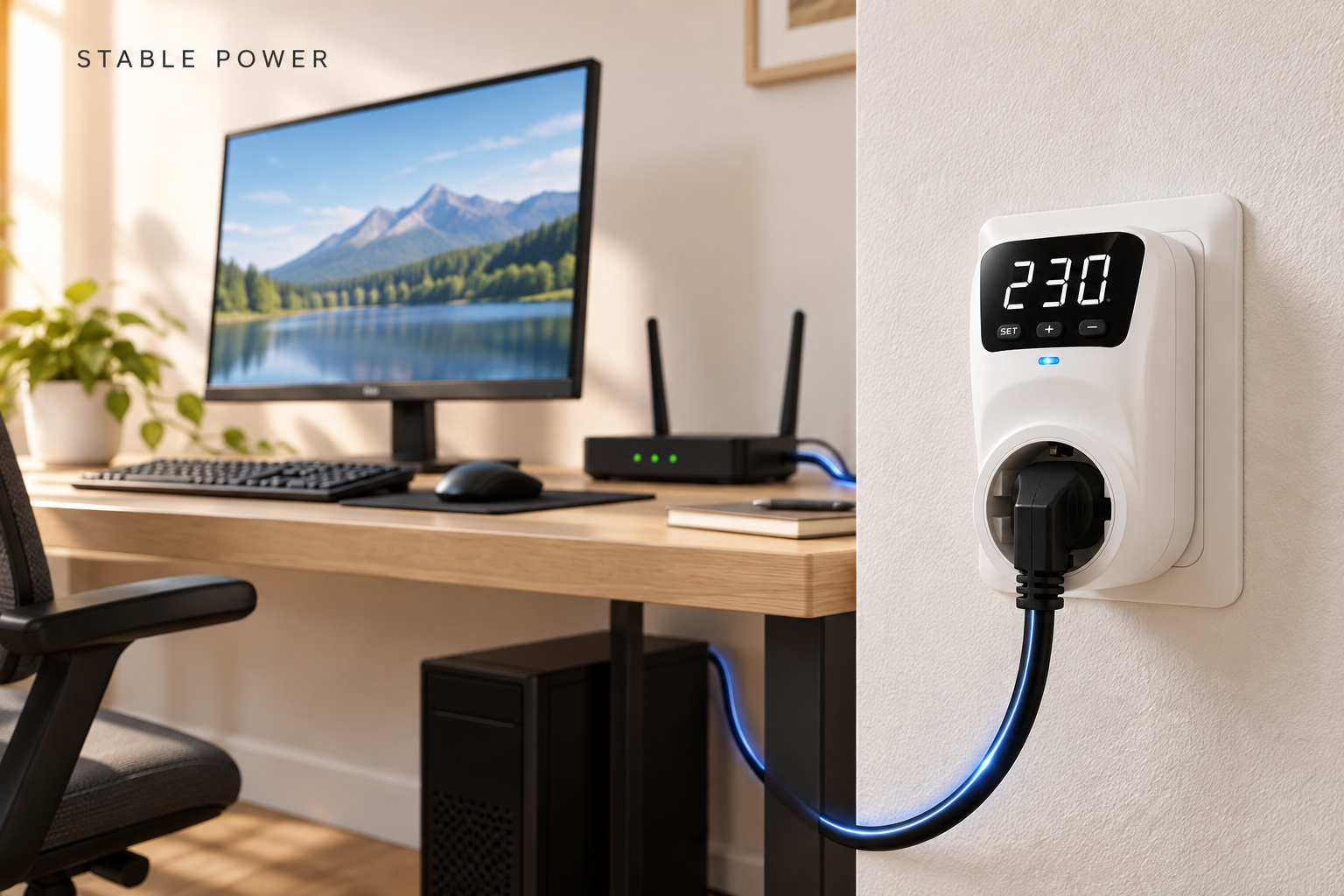
Let me show you what really happens to your electronics during power problems. You will see why this small device is so important for your business and your customers.
Why do customers misunderstand power outages?
Many customers feel confused when their appliances die early. They think a power cut is just a temporary stop. They do not know the real danger happens when power returns.
Customers misunderstand power outages because they only see the device turn off. They do not see the invisible voltage spikes when power comes back. These sudden changes damage internal parts1. Using a voltage protector prevents this hidden damage and extends the life of the appliance.
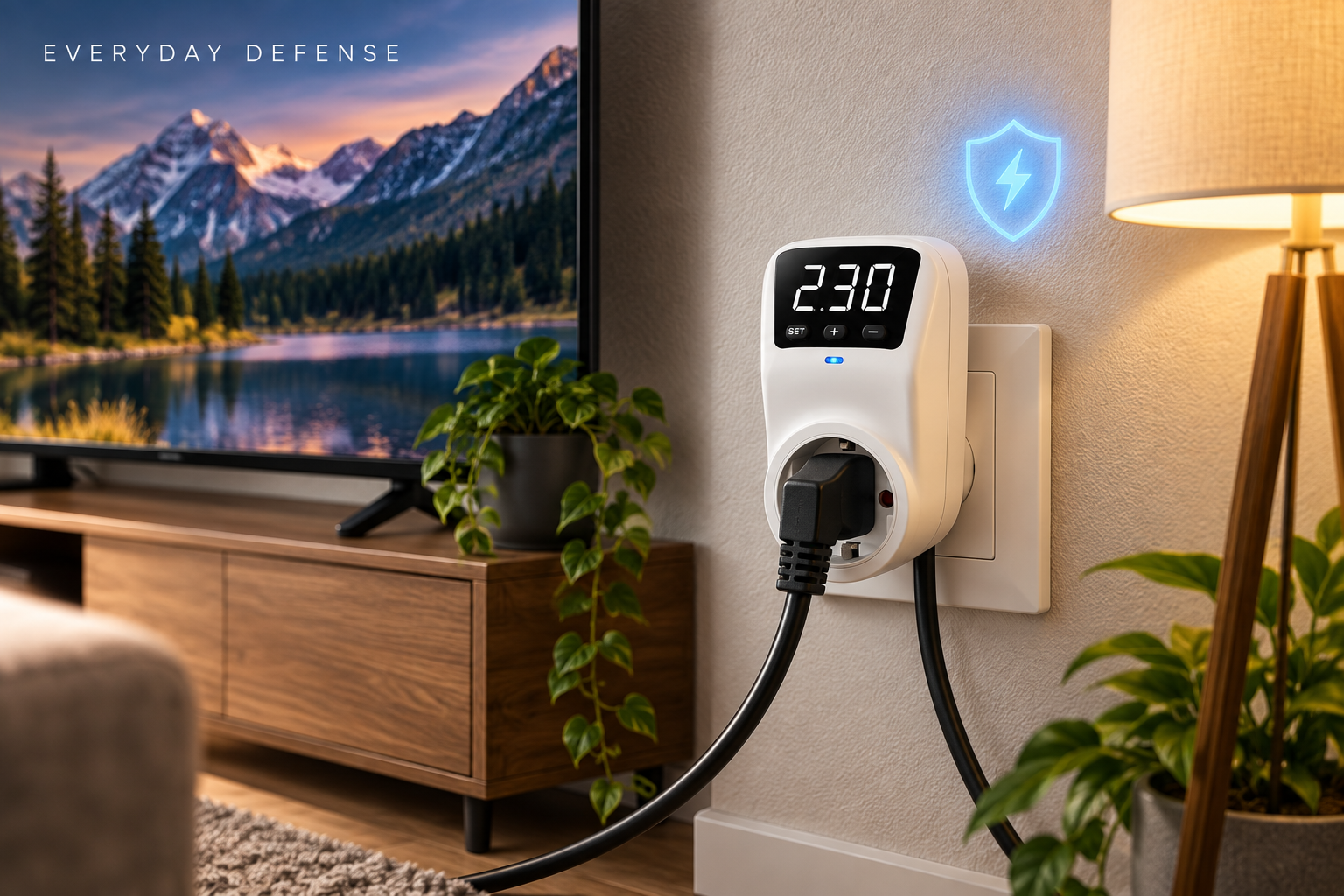
When I talk to our clients, I often hear a common story. The power goes out, and all home appliances stop working. The customer thinks they just need to wait for the power to come back. They believe everything will be fine. But after some time, they are confused. They ask me why their home appliances have such a short life. They have to spend extra money to buy new ones. I always tell them about voltage protectors. But I find that many customers do not know why they need one. They do not understand how a voltage protector keeps their home appliances safe. The truth is that a simple power cut is rarely just a power cut. The moment the power comes back, it often brings a huge surge of energy. This surge hits the machine hard. If there is no protection, the machine takes all the damage. As a supplier, I want to help you educate your buyers. When they know the risk, they will see the value of a good protector.
What power problems happen in different regions?
Different countries face different power grid issues. You might lose sales if your products fail in bad grid areas. You need to know what your products face every day.
In regions like Southeast Asia, Africa, the Middle East, and parts of Europe, five common power problems happen. These include high voltage, low voltage, frequent power cuts, unstable voltage, and sudden power return. A voltage protector blocks all these harmful changes from reaching the connected device.
We sell products to many different countries. From my experience, the power supply is not always stable2. In places like Southeast Asia, Africa, the Middle East, and even some parts of Europe, the power grid can be very weak. Families in these areas face sudden power problems all the time. First, the voltage can get too high. Second, the voltage can drop too low. Third, the power might cut off very often. Fourth, the voltage can just be unstable and go up and down. Fifth, the power might cut off suddenly and then come back very fast. All these situations are very bad for normal appliances. If you sell electrical products to these markets, you must think about these risks. Your customers will blame your product if it breaks. But the real problem is the local power grid. Here is a simple table to show the common power issues:
| Power Problem | What It Means |
|---|---|
| High Voltage | Too much power enters the device. |
| Low Voltage | Not enough power to run the device. |
| Frequent Cuts | The device turns on and off too much. |
| Unstable Power | The power goes up and down constantly. |
| Rapid Return | A big shock hits the device when power comes back. |
Which appliance parts get damaged by bad power?
Bad power does not just break the outside of a machine. It ruins the expensive parts inside. This leads to costly repairs and angry end users.
Unstable power damages key internal parts of an appliance. The most affected parts are motors, PCB boards, power supplies, sensors, and electronic control systems. Repeated power changes shorten the life of these parts. In the worst cases, this damage can even start a fire in the home.
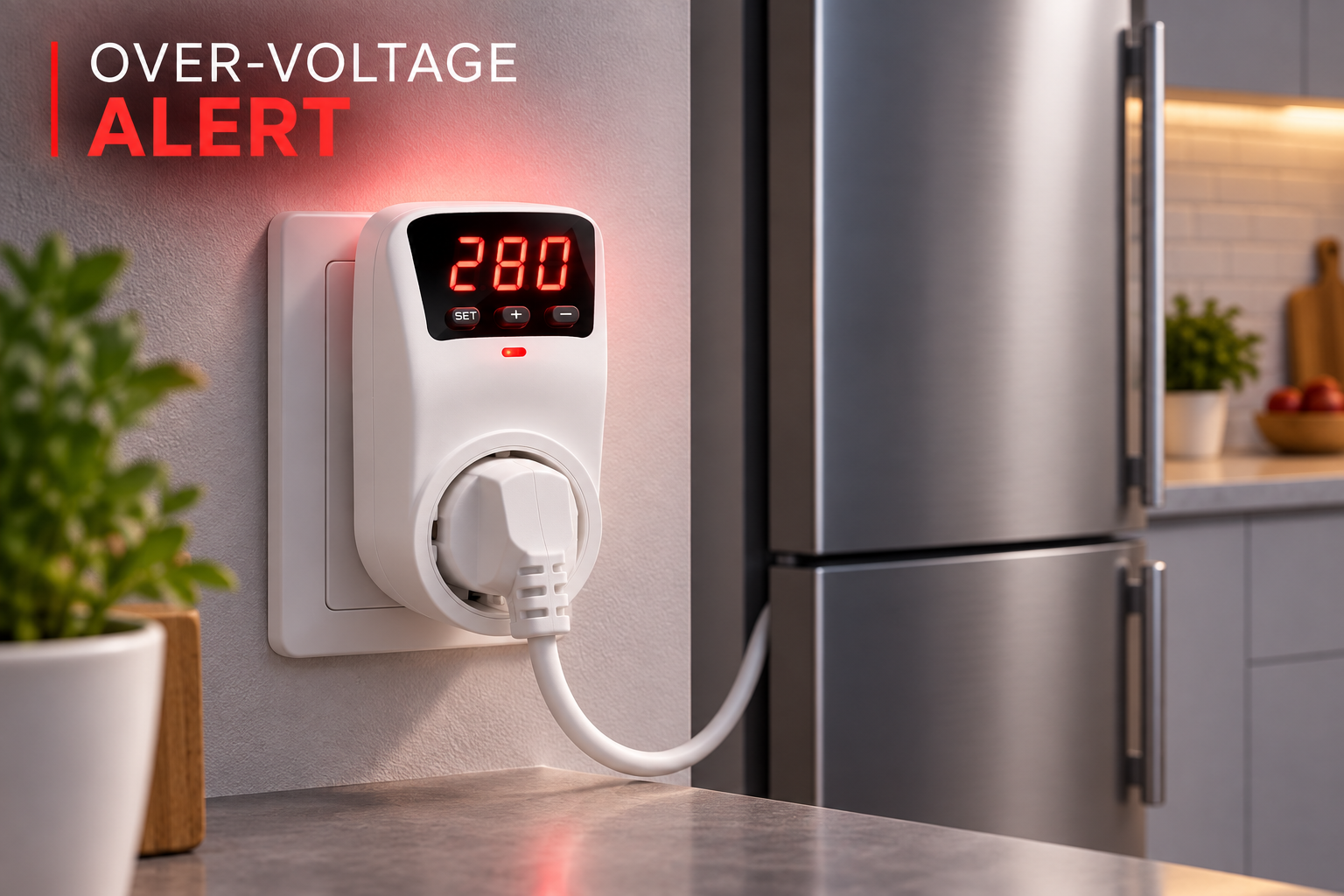
Let us look at what exactly breaks inside an appliance. When the voltage goes up and down, it hits the core parts of the machine. The motors get too hot and burn out. The PCB boards short circuit and melt. The power supplies fail to convert energy. The sensors give wrong signals. The electronic control systems break down completely. Repeated power changes are like hitting these parts with a hammer every day. This greatly shortens the life of the home appliance. What is even worse is the safety risk. When a PCB board or a motor burns, it can cause a real fire. This is a huge danger for the family. In our factory, we test these parts in our lab. We see how fast bad power destroys them. That is why we always suggest adding a voltage protector to your product line. It protects the motors and PCB boards. It keeps the end user safe from fire accidents.
Why is a refrigerator so easy to damage?
Think about the most common appliance in a home. The refrigerator works non-stop. But this hard work makes it very weak against power problems.
A refrigerator is easy to damage because it runs 24 hours a day. It uses a compressor to keep the inside temperature stable. This means the fridge starts and stops many times a day. Every time the voltage changes, it puts extra stress on the compressor and electronic parts.
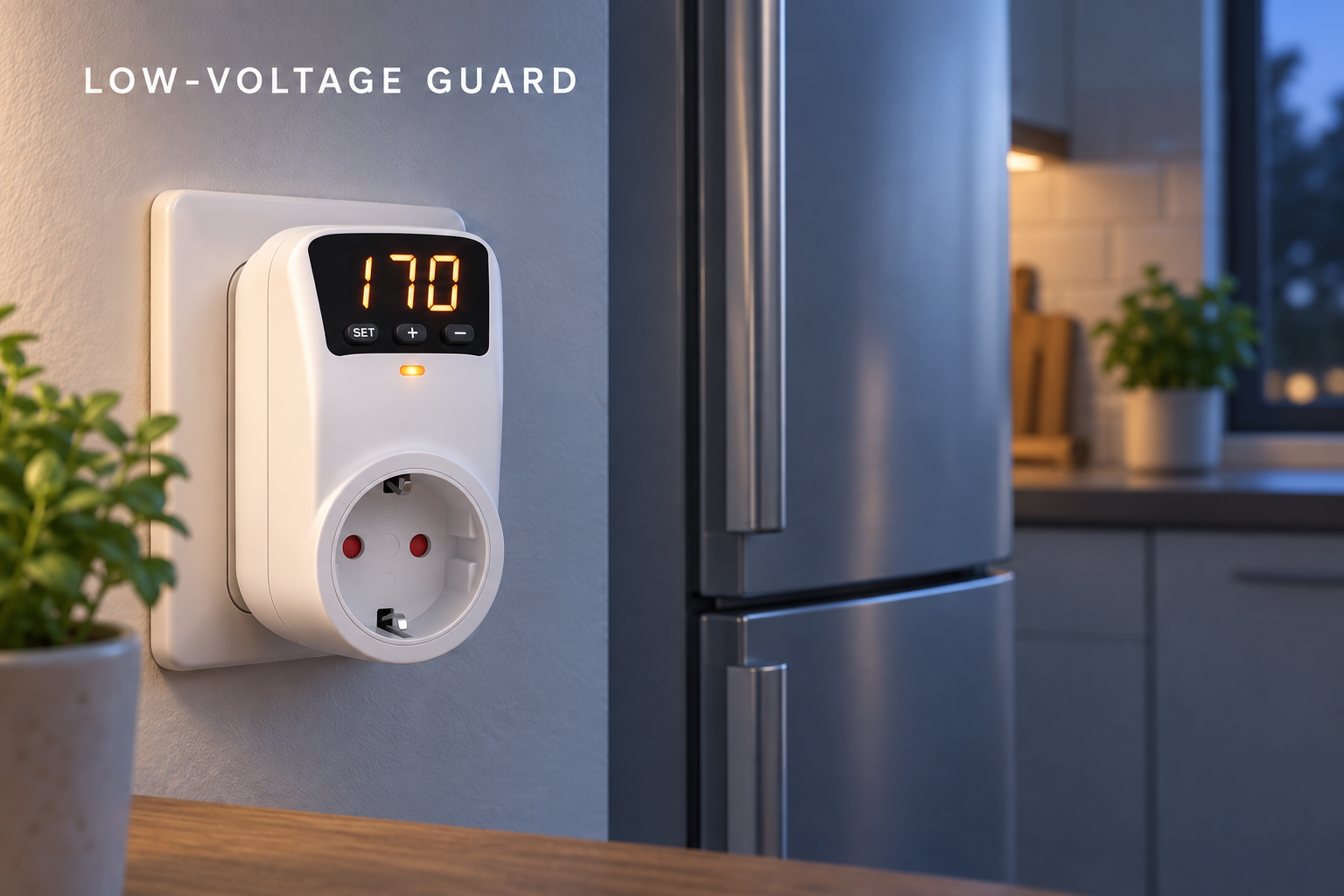
I want to give you an example of a very common home appliance. Almost every home has a refrigerator. We use it every single day. The refrigerator works 24 hours a day to keep our food fresh. To keep the temperature stable, it relies heavily on its compressor. We open and close the fridge door often. So, the machine starts and stops many times. This is normal. But when the power grid is weak, this normal work becomes dangerous3. Every time the voltage is unstable, starting the fridge puts a huge burden on the compressor. The electronic parts inside also take a lot of stress. Over time, the compressor gets weak. It makes more noise and uses more electricity. Finally, it stops working completely. The customer then has to buy a new fridge. This is very expensive. If they knew about the danger, they would want to protect it.
How does a voltage protector save a refrigerator?
You do not want your customers to lose their expensive fridges. A simple tool can stop this from happening. It acts as a shield against bad power.
A voltage protector acts as a strong buffer between the refrigerator and the wall power. It takes the hit from bad voltage so the fridge does not have to. This simple action keeps the compressor safe, reduces stress on internal parts, and makes the refrigerator last much longer.
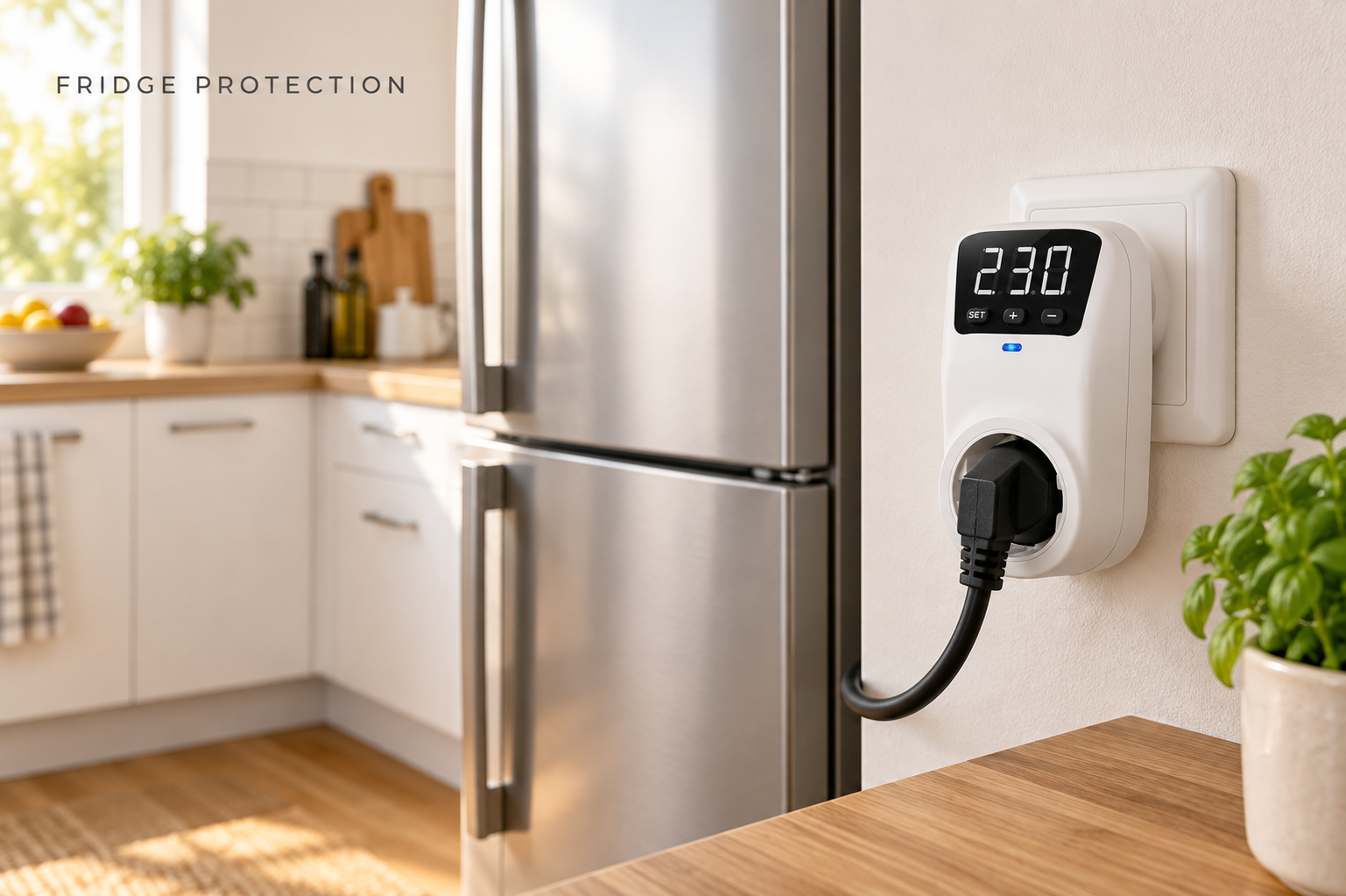
When you plug a refrigerator into a voltage protector, you give it a safety shield. The voltage protector stands between the fridge and the wall socket. It acts as a buffer. If a huge surge of power comes from the wall, it hits the protector first. The protector stops the bad power from reaching the fridge. This protects the compressor. It also protects the sensitive PCB boards and sensors inside the fridge. Your customers will not have to worry about their fridge breaking down after a sudden power cut. We make these protectors in our factory in Ningbo. We test them with real appliances to make sure they work perfectly. By offering this product to your buyers, you help them save money. You also build a good reputation for your brand. They will trust you because you provide a full solution for their home safety.
How does a voltage protector actually work?
You might wonder how this small device stops big electrical problems. The process is fully automatic. It requires no human help to keep the house safe.
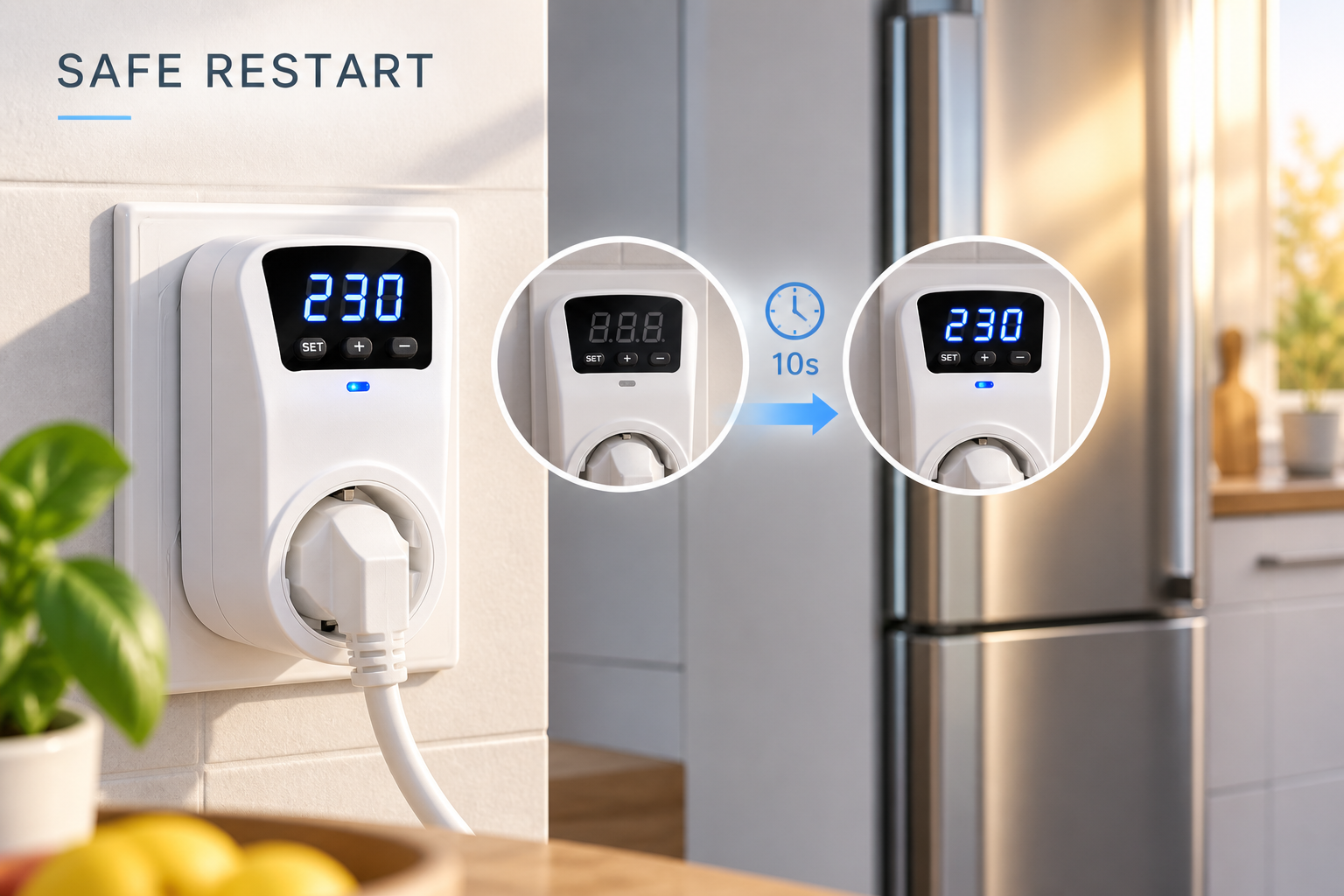
A voltage protector constantly monitors the input voltage. If the power goes above the high limit or below the low limit, it automatically cuts the power. It keeps checking the line. When the voltage returns to the safe range, it reconnects the power to the appliance.
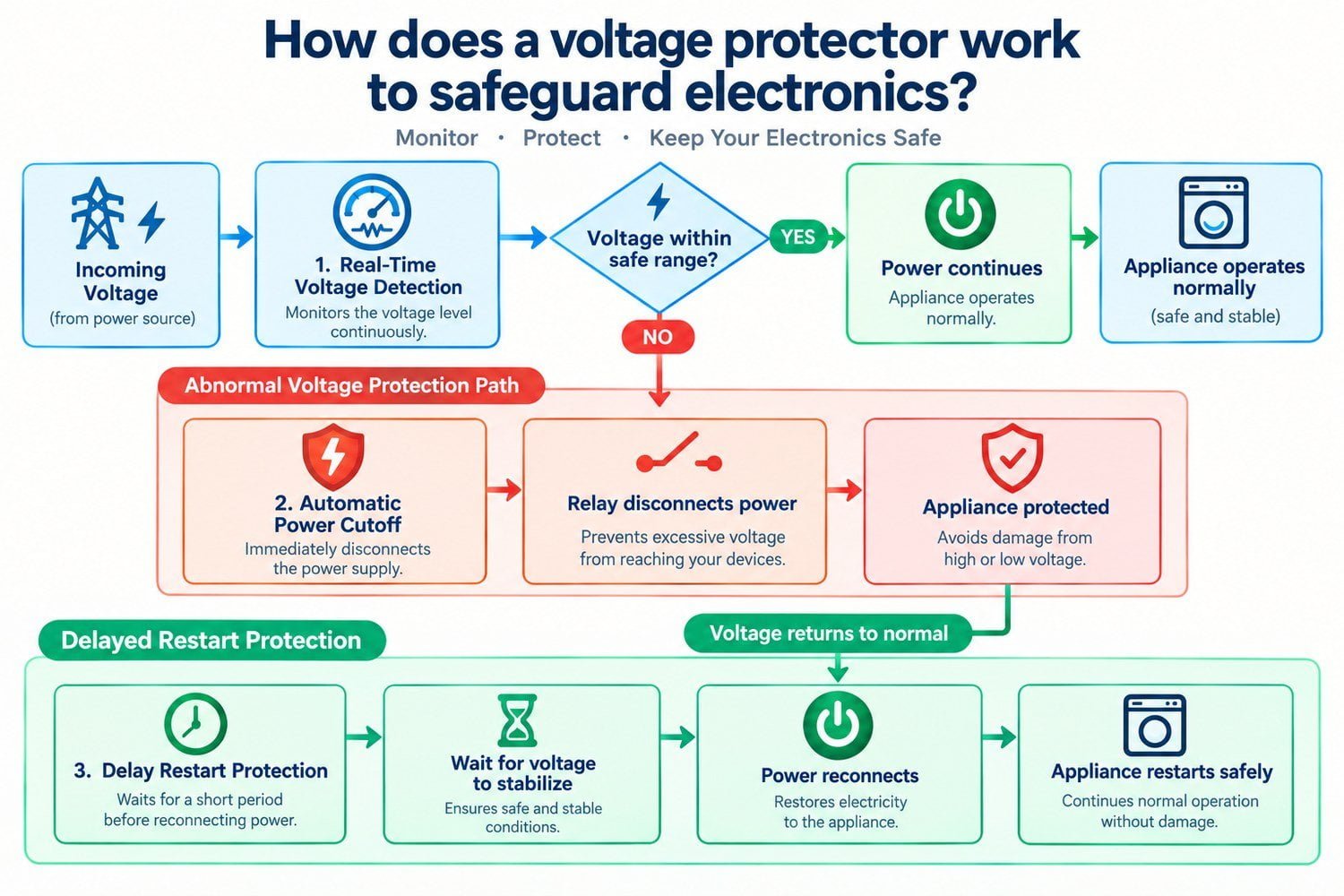
You might wonder how the device actually does this job. The work process is very simple but very effective. The voltage protector constantly monitors the input voltage from the wall. It has a set high limit and a set low limit. When the voltage goes above the high limit, it is dangerous. The protector automatically cuts the power to the fridge. When the voltage drops below the low limit, it is also dangerous. The protector cuts the power again. The fridge stays off and stays safe. Then, the protector waits4. It keeps checking the voltage. When the voltage returns to the normal and safe range, the protector reconnects the power. The fridge turns back on automatically. The user does not need to do anything. The protector does all the hard work to keep the appliance safe day and night. This automatic system is perfect for areas with frequent power cuts. It gives the appliance time to rest before starting again.
How do you set the correct voltage range?
Different appliances need different power levels to stay safe. You cannot use the same setting for everything. A good protector lets you control these limits.
You set the correct voltage range by checking the manual of your appliance. Most protectors have buttons to set the high and low limits. If the power goes outside these numbers, the device cuts the power5. This custom setting provides the best safety for specific machines.
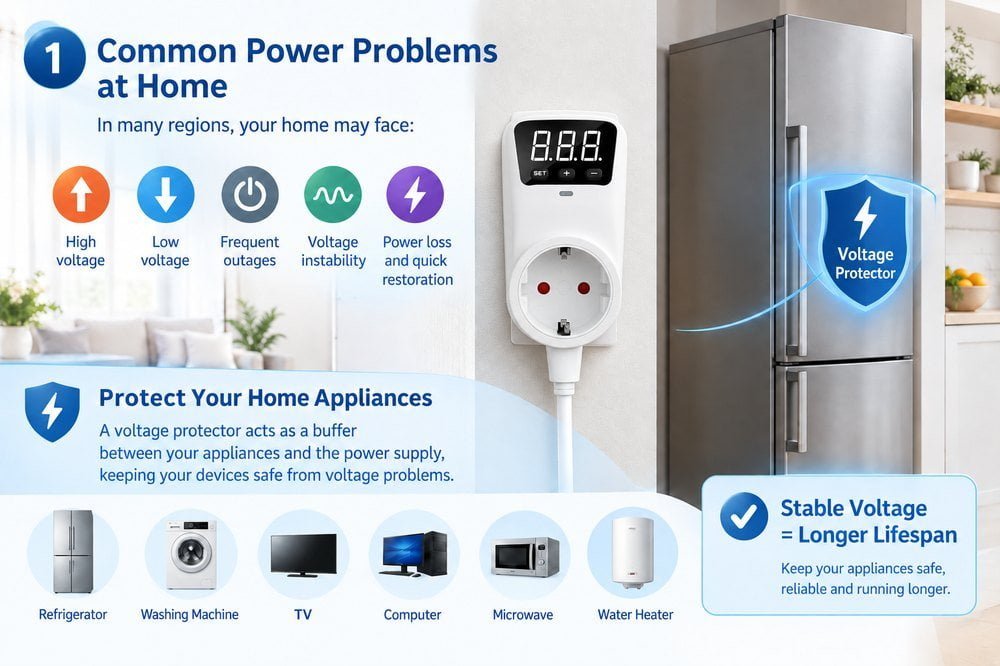
As a factory, we know that markets have different needs. A home in Europe has a different power grid than a home in Africa. That is why setting the right voltage range is very important. Our smart voltage protectors allow users to adjust the high and low limits. For example, a TV might need a very tight power range. A simple fan might accept a wider power range. Here is a table to show how you might set different limits:
| Appliance Type | Low Limit | High Limit | Delay Time |
|---|---|---|---|
| Refrigerator | 170V | 250V | 3 Minutes |
| Television | 190V | 240V | 10 Seconds |
| Air Conditioner | 170V | 250V | 3 Minutes |
When you buy from us, we can pre-set these numbers for your specific market. This makes it very easy for your end users. They just plug it in, and the device is ready to work safely. We want to make sure your brand offers the best user experience.
How can you ensure safe usage every day?
Even the best safety device needs proper care. You must teach your customers how to use it right. This stops accidents and keeps the product working well.
You can ensure safe usage by never overloading the voltage protector. Always check the maximum power limit on the label. Make sure the plug fits tightly into the wall socket. Keep the device away from water and heat to maintain its long life and protect your home.
I always remind my clients about basic safety rules. A voltage protector is a safety tool, but it has limits. First, you must never plug too many appliances into one protector. If you overload it, the protector will get hot and might melt. Second, you must make sure the wall socket is clean and tight. A loose plug can cause sparks. Third, always buy products with real safety certificates. Our factory holds CE, ROHS, and GS certificates. We test every single product before we ship it to you. We use temperature rise testers and high voltage pulse testers in our lab. We want to be sure that the product will not fail in your customer's home. By following these simple rules, the voltage protector will work perfectly for many years. It will quietly guard the expensive electronics and bring peace of mind to every family. You can trust our quality control to support your business growth.
Conclusion
A voltage protector is the best shield for your electronics. It blocks bad power, saves expensive appliance parts, and brings peace of mind to every home.
"Voltage spike - Wikipedia", https://en.wikipedia.org/wiki/Voltage_spike. Studies show that voltage spikes can cause immediate and long-term damage to internal components of electronic devices, leading to failure. Evidence role: mechanism; source type: research. Supports: These sudden changes damage internal parts.. Scope note: The findings may not apply universally to all types of appliances or conditions. ↩
"How electricity markets shape grid reliability: Which model works best?", https://iee.psu.edu/news/blog/how-electricity-markets-shape-grid-reliability-which-model-works-best. Research highlights that power supply stability varies significantly across different regions, affecting appliance performance and longevity. Evidence role: general_support; source type: government. Supports: The power supply is not always stable.. Scope note: The context may differ based on local infrastructure and regulations. ↩
"Can Low Voltage Damage Fridge? Know the Risks - Aulten", https://aulten.shop/blogs/blog-posts/can-low-voltage-damage-fridge?srsltid=AfmBOoqEYrjT-6JHvkjrANMApXhrnB3eLhK66fZMjtsaTXxhD33XPNRl. Studies show that continuous operation under unstable voltage conditions can lead to increased wear and tear on appliances, particularly those with motors. Evidence role: mechanism; source type: research. Supports: This normal work becomes dangerous.. Scope note: The findings may not apply to all appliance types or usage scenarios. ↩
"[PDF] Monitoring of surge-protective devices in low-voltage power distribution ...", https://www.nist.gov/document/monitoringspdspdf. Voltage protectors are designed to monitor voltage levels continuously and only reconnect power when conditions are safe, ensuring appliance protection. Evidence role: mechanism; source type: institution. Supports: The protector waits.. Scope note: The monitoring capabilities may vary by model and manufacturer. ↩
"Surge protector - Wikipedia", https://en.wikipedia.org/wiki/Surge_protector. Voltage protectors are engineered to automatically disconnect power during unsafe voltage conditions, preventing potential damage to connected devices. Evidence role: mechanism; source type: education. Supports: The device cuts the power.. Scope note: The operational details may differ based on specific models and technologies. ↩