
Voltage protector vs surge protector: what are the differences, and which one should you choose?
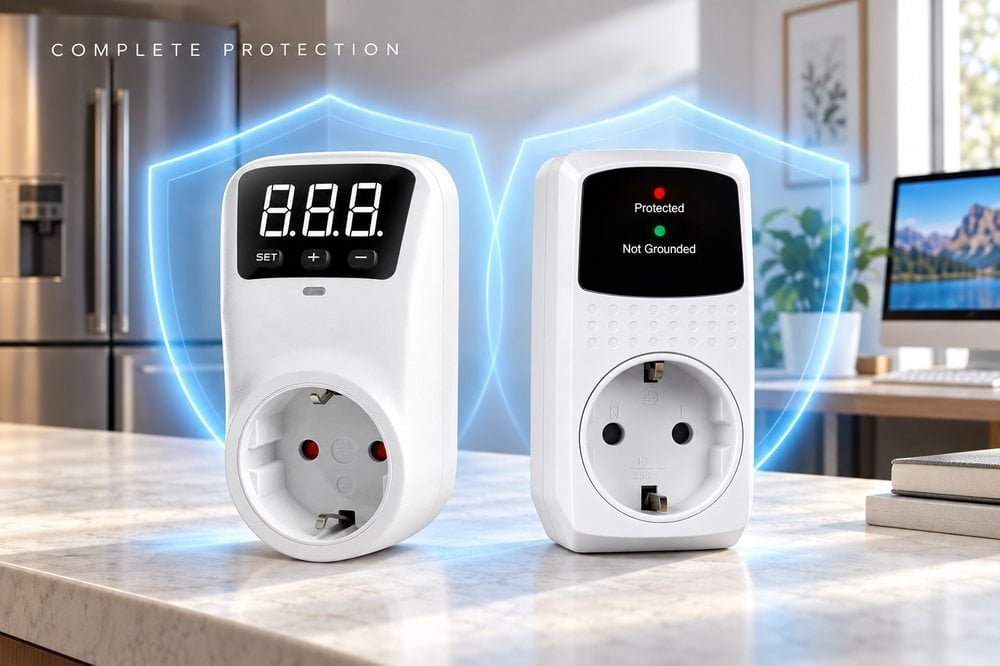
Are your appliances safe from power issues? Bad power can break expensive machines fast. Let us see how voltage protectors and surge protectors keep your equipment safe.
A voltage protector guards against continuous high or low voltage by cutting power. A surge protector blocks sudden, instant power spikes like lightning. Choose a surge protector for sensitive electronics. Choose a voltage protector for heavy appliances with motors.
People often think these two devices do the same job. But if you pick the wrong one, your machines will still break, and you will lose money.
Are voltage protectors and surge protectors the same thing?
Many buyers think any power protector stops all high voltage. This mistake costs money and ruins appliances. Let us clear up this common confusion right now.
Voltage protectors and surge protectors are not the same. They solve completely different power problems. You cannot swap one for the other. Using the wrong protector leaves your devices open to major damage.
I talk to many customers who want to buy power protectors. They often tell me they just want to stop high voltage. They think a surge protector and a voltage protector do the exact same job. This is a big mistake.
They think these items are the same. But they are not. They solve two very different electrical problems. A surge protector works like a shield against very fast attacks. A voltage protector works like a smart switch for slow, steady power changes.
If you put a surge protector on an air conditioner in a place with low voltage, the air conditioner will still burn out. The surge protector will not stop low voltage. We must understand the exact differences to protect our machines. Here is a simple breakdown of the main differences between the two devices.
| Feature | Surge Protector | Voltage Protector |
|---|---|---|
| Main Function | Blocks instant high voltage | Manages steady abnormal voltage |
| Reaction Speed | Very fast | Slower |
| Power Cut | Usually keeps power on | Cuts power completely until safe |
| Target Problem | Lightning, fast spikes | Over-voltage, under-voltage |
What exactly does a surge protector do?
Lightning strikes and grid changes cause instant power spikes. These fast shocks kill sensitive electronics in a flash. A surge protector is your best defense here.
A surge protector absorbs or releases instant high-voltage shocks. It reacts very fast. This stops sudden power spikes from reaching your devices. It is perfect for computers, routers, and televisions.
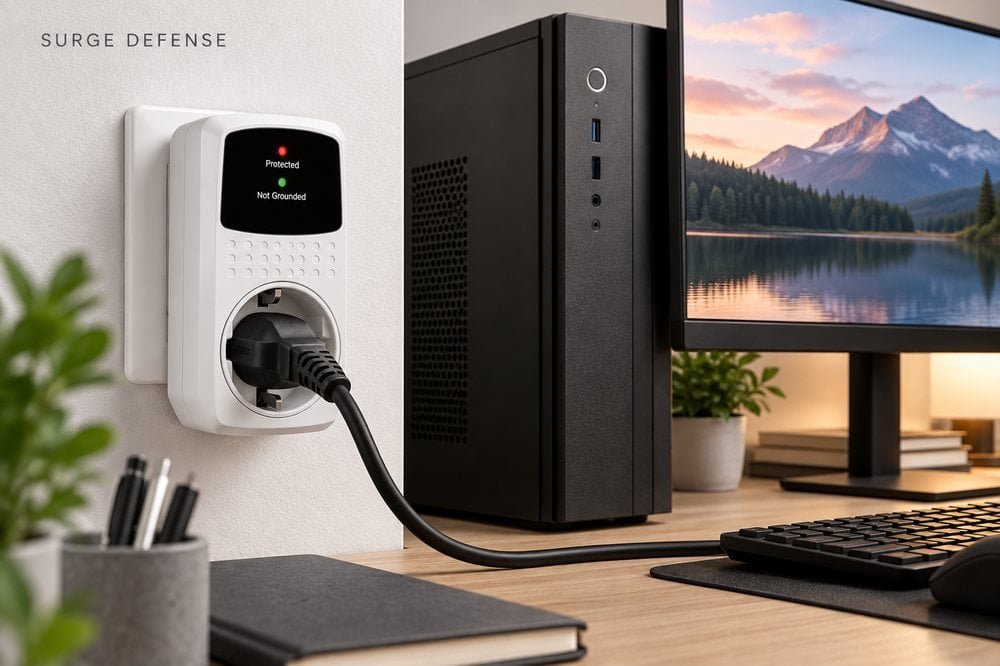
Let us look closer at surge protectors. A power surge is a very fast increase in voltage. It lasts for only a tiny split second. But this short time is enough to melt small wires inside computer chips.
Surges come from lightning strikes outside. They also come from big motors turning on and off inside your building. When a surge happens, the surge protector acts quickly. It takes the extra electricity and pushes it into the ground wire. It keeps the normal power flowing to your device.
I always tell my clients to use surge protectors for sensitive electronics. These devices have small, sensitive parts. They cannot handle sudden shocks. Without a surge protector, one bad storm can destroy an office full of computers.
| Device Type | Risk from Surge | Needs Surge Protector? |
|---|---|---|
| Desktop Computer | Very High | Yes |
| Smart TV | Very High | Yes |
| Wi-Fi Router | High | Yes |
| Basic Light Bulb | Low | No |
What is the main job of a voltage protector?
Bad power grids cause long-term voltage drops or rises. This steady damage ruins heavy motors. A voltage protector solves this continuous problem effectively.
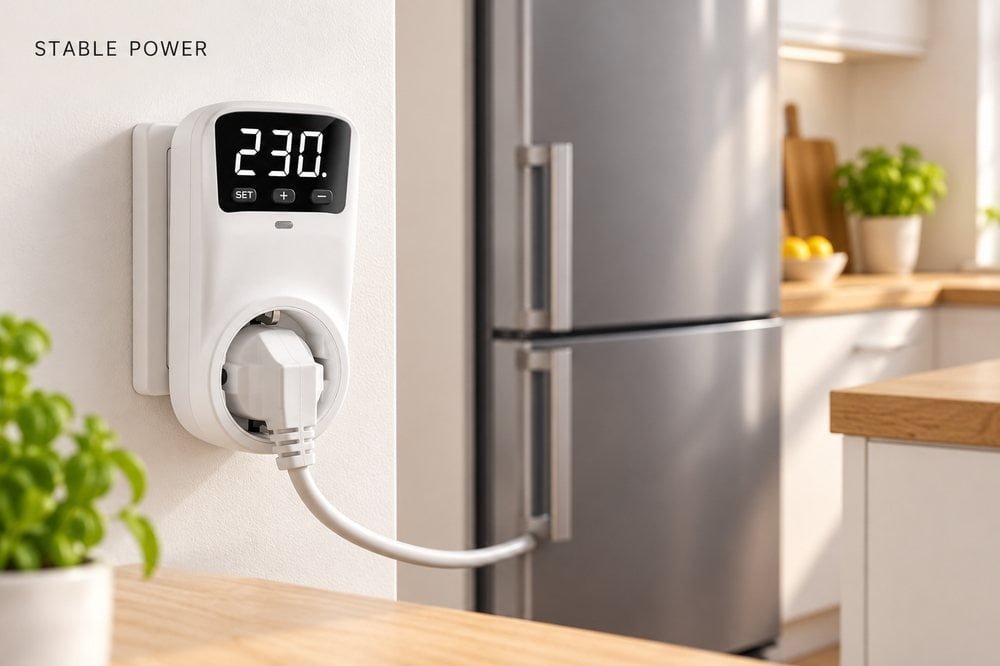
A voltage protector monitors power all the time. It cuts power when voltage goes too high or too low. It gives power back only when the voltage is safe again. This protects motors and compressors.
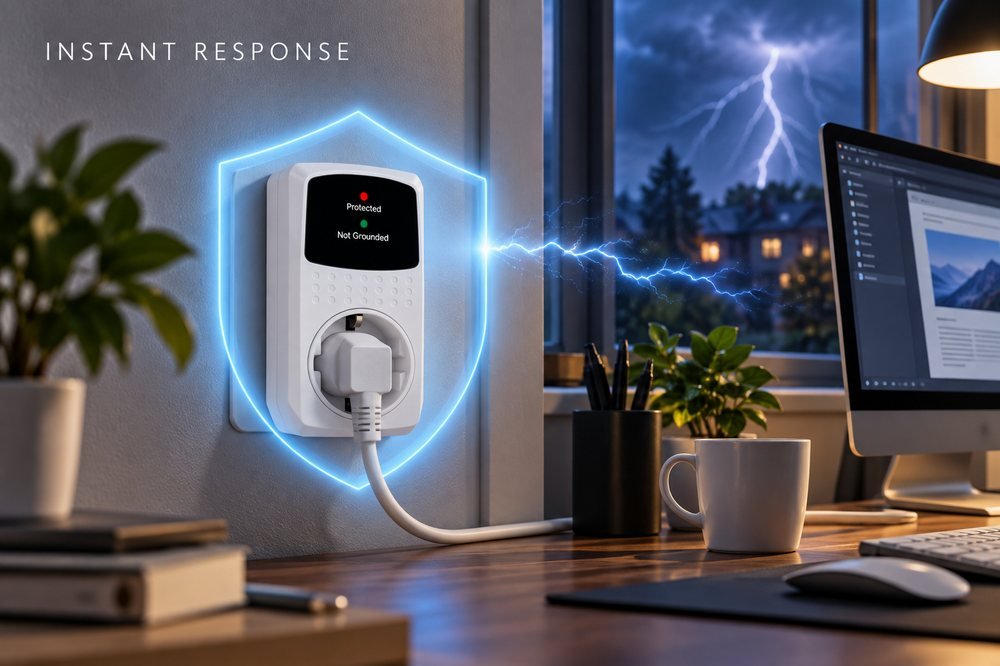
Now let us talk about voltage protectors. Sometimes the power grid is just bad. The voltage stays too high or too low for minutes or hours. This is not a fast spike. This is a continuous problem.
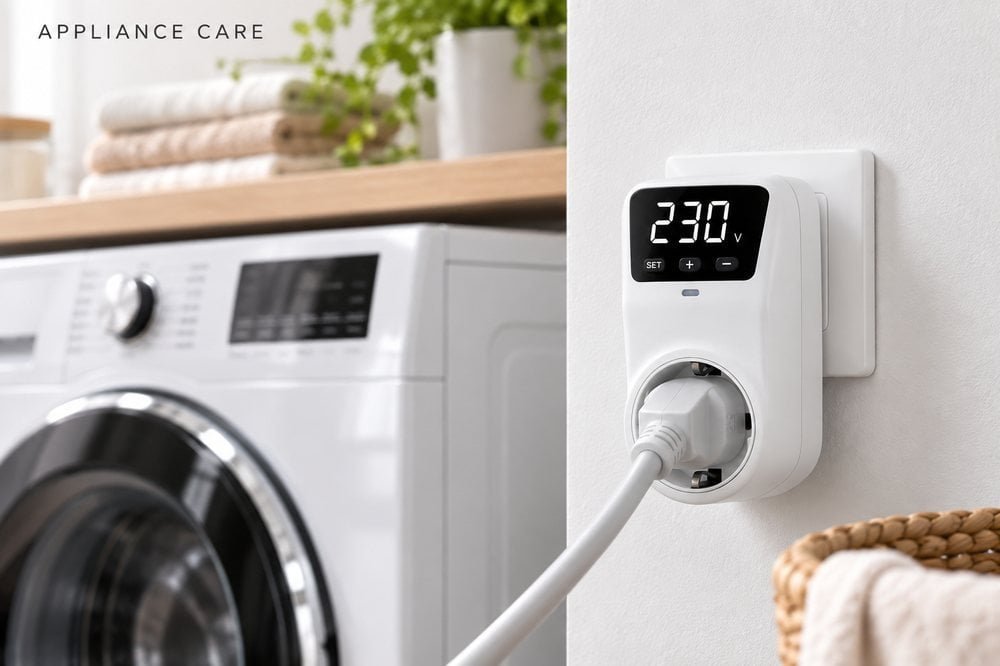
When voltage is too low, motors have to work too hard. They get very hot. Soon, they burn out and die. A voltage protector watches the power line all the time. If the power goes outside a safe range, it acts like an automatic switch. It cuts the power off completely.
It waits until the power goes back to normal. Then, it turns the power back on. I strongly believe this is the best way to protect heavy home appliances. Things with compressors need stable power to survive.
| Power Status | Voltage Protector Action | Appliance Status |
|---|---|---|
| Normal Voltage (220V) | Keeps power ON | Works normally |
| Under-voltage (170V) | Cuts power OFF | Safe, not running |
| Over-voltage (260V) | Cuts power OFF | Safe, not running |
| Safe Voltage Returns | Restores power ON | Works normally again |
Which protector should you choose for your equipment?
You cannot just buy the cheapest option. Your choice depends entirely on what you want to protect. Let us match the protector to your specific machines.
Look at the device you want to protect. If it has a computer chip, use a surge protector. If it has a motor or compressor, use a voltage protector. Match the tool to the task.
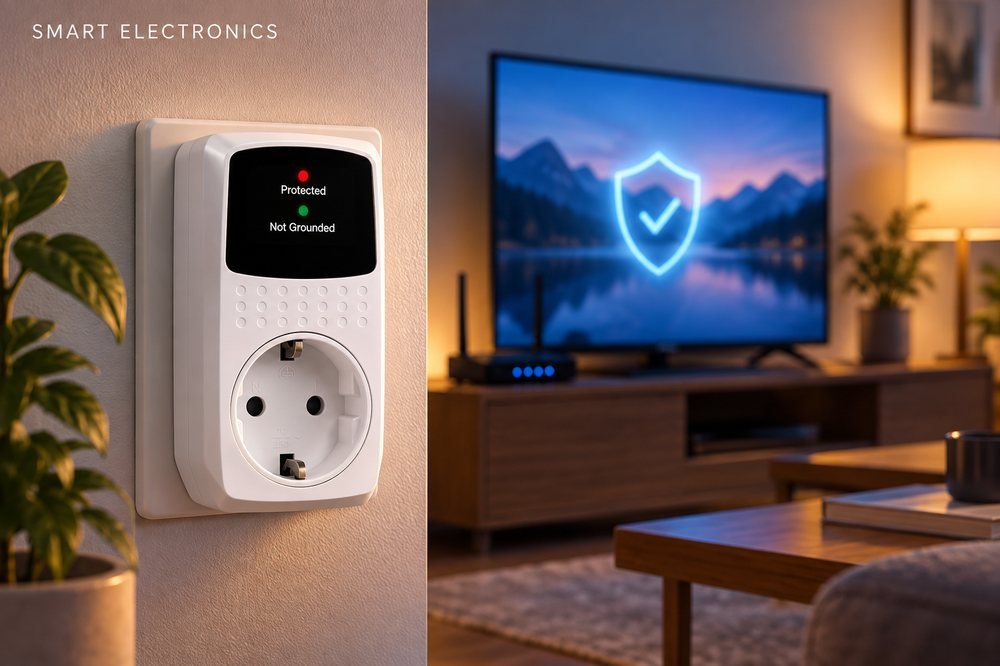
I often help brand buyers and wholesalers pick the right products for their markets. The rule is simple. Look at the appliance first.
If the appliance is smart or uses data, it needs surge protection. Computers, gaming systems, and smart home hubs fall into this group. They hate sudden electrical spikes.
If the appliance does heavy physical work, it needs voltage protection. Refrigerators, air conditioners, freezers, and water pumps fall into this group. They hate low voltage and unstable power. Low voltage makes their motors heat up and break.
You must match the protector to the appliance. If you sell to DIY stores or electrical buyers, you need to offer both types. Your customers will have both types of appliances in their homes.
| Appliance Category | Example Devices | Best Protection Choice |
|---|---|---|
| Sensitive Electronics | PC, TV, Audio System | Surge Protector |
| Motor/Compressor | Fridge, AC, Water Pump | Voltage Protector |
| Heating Elements | Basic Heater, Toaster | Usually not needed |
| Smart Appliances | Smart Fridge | Both |
How does your local power grid affect your choice?
Different places have very different power problems. Some areas get bad storms. Other areas have old power lines. Your local grid tells you exactly what you need.
Assess your local power grid. If you get frequent lightning storms, you need surge protection. If your lights flicker often or power drops daily, you need a voltage protector. Your environment guides your choice.
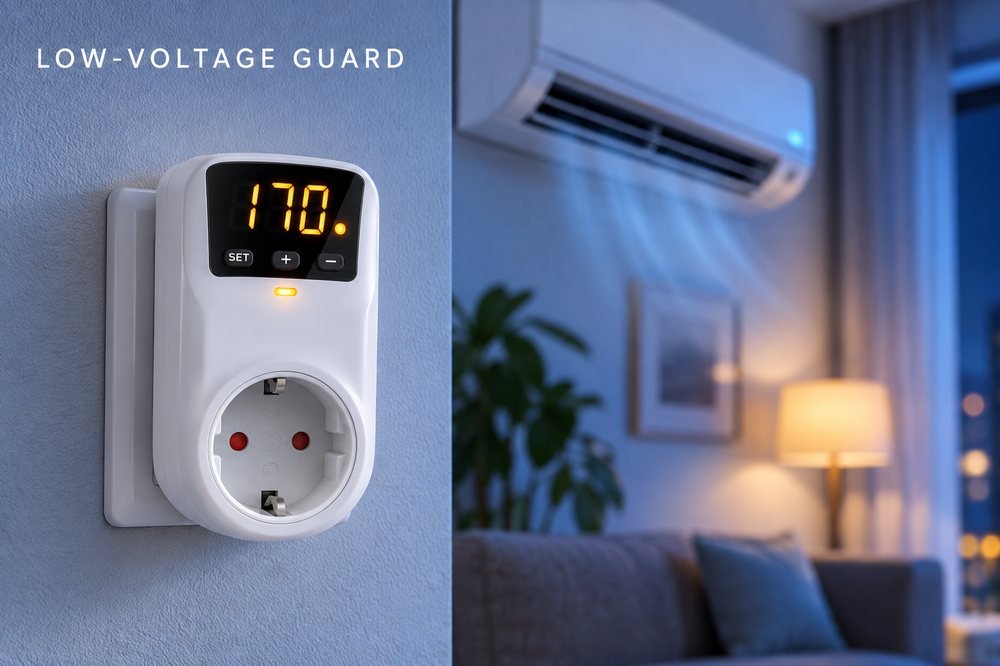
The appliance is only half of the story. The local power grid is the other half. I have seen markets in South America and the Middle East where the grid is very weak. The voltage goes up and down all day.
In these places, a voltage protector is a daily lifesaver. It works hard every single day to stop appliances from burning out. The steady voltage changes are the main enemy there.
But in some parts of Europe or Oceania, the grid is very stable. The voltage rarely drops. But they get summer lightning storms. In these places, a surge protector is much more important. It sits quietly for months, waiting to stop one deadly lightning strike.
You must know your local environment. This helps you buy the right items for your business.
| Grid Condition | Main Risk | Recommended Solution |
|---|---|---|
| Frequent Lightning | Fast, huge voltage spikes | Surge Protector |
| Old Power Lines | Daily voltage drops and rises | Voltage Protector |
| Factory Area | Spikes from heavy machines | Surge Protector |
| Rural Area | Long lines cause low voltage | Voltage Protector |
Can you use both protectors at the same time?
Sometimes one protector is not enough. Complex power grids bring both sudden spikes and long voltage drops. You might need full coverage for your best devices.
Surge protectors and voltage protectors are not competitors. They work together. Surge units stop sudden problems. Voltage units stop continuous problems. For very expensive appliances, using both gives you complete protection.
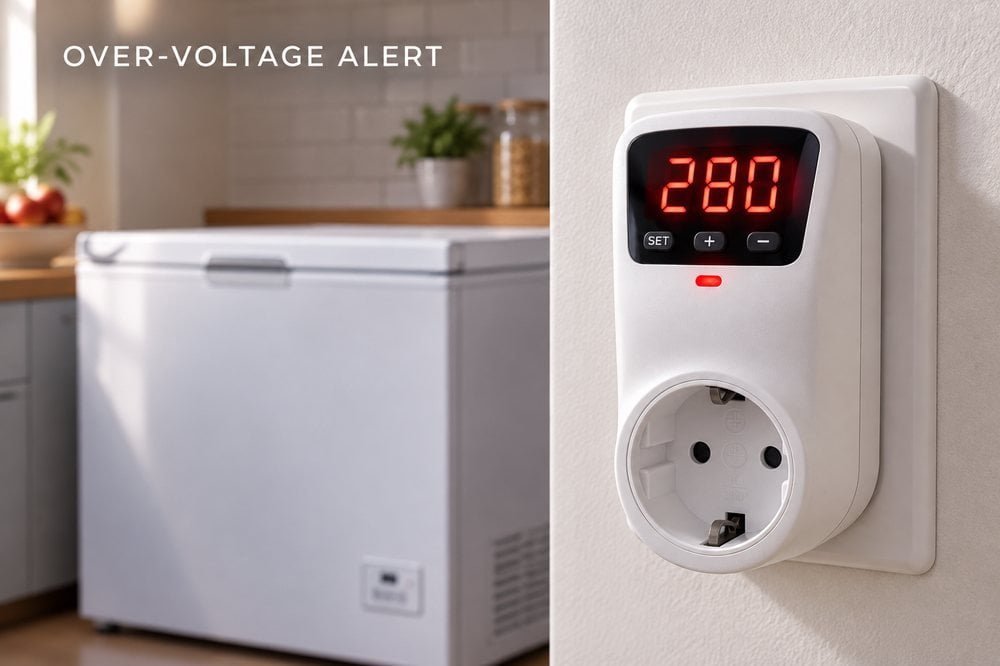
Many people ask me if these two devices compete with each other. They do not. They are a team. They are partners in safety.
Think about a very expensive smart refrigerator. It has a heavy compressor motor. It also has a delicate computer screen on the front. If the voltage drops, the motor will break. If lightning strikes, the screen will break.
In a complex electrical environment, you need both types of protection. The surge protector handles the sudden, fast problems. The voltage protector handles the slow, continuous problems.
When you combine them, you build a complete safety net. This is very important for project buyers and smart home builders. We often suggest using them together to ensure zero damage to high-value items.
| Problem Type | Surge Protector Role | Voltage Protector Role |
|---|---|---|
| Lightning Strike | Absorbs the shock | Does not react fast enough |
| Grid Power Drop | Does nothing | Cuts power to save motor |
| High Value Item | Needs this for chips | Needs this for motors |
| Overall Goal | Fast defense | Steady defense |
How do we ensure quality in our factory?
As a manufacturer, we test these products every day. We build them to solve real problems. Let me share how we make sure they are reliable.
At Timebest, we design both surge and voltage protectors for global markets. We test them in our labs with high-voltage pulses. We make sure they meet CE and ROHS standards. We offer custom solutions for different brands.
Quality is everything in the electrical business. A failed protector means a broken appliance and an angry customer. At Timebest, we take this very seriously. We have our own laboratory to test every design.
We use high voltage pulse testers to check our surge protectors. We hit them with huge spikes of electricity to make sure they survive. We use thermostatic test chambers to check our voltage protectors. We make sure they cut power accurately, even in extreme heat or cold.
Our factory holds ISO9001 and BSCI certifications. We provide OEM and ODM services to brands around the world. Whether you need custom logos, special packaging, or completely new product designs, we can help. We want to be your long-term supply chain partner.
| Testing Equipment | Purpose | Product Tested |
|---|---|---|
| High Voltage Pulse Tester | Acts like lightning strikes | Surge Protector |
| Thermostatic Chamber | Tests extreme heat and cold | Both |
| Leakage Current Tester | Ensures user safety | Both |
| Digital Bridge Tester | Checks part quality | Both |
What is the final question you should ask yourself?
Stop asking which protector is better. That is the wrong question. You must ask a better question to get the right answer for your specific needs.
Do not ask "which is better." Instead, ask "what electrical risks does my equipment face?" Once you know your risks, you know exactly what to buy. Focus on your specific needs.
I want to leave you with one main thought. There is no simple "better" choice between a voltage protector and a surge protector. It is all about the right fit.
If you ask "which is better?", you might make a bad choice. You must ask "what risks does my equipment face?"
Look at your home or your customer's environment. Are there storms? Are the power lines old? Then look at the appliances. Do they have chips or motors? Once you answer these simple questions, the choice becomes clear.
For wholesalers and brand buyers, offering a clear choice to your customers builds trust. Help them understand their risks. When you educate your buyers, they will keep coming back to you. We are always here to help you pick the best products for your market.
| Risk Assessment | Question to Ask | Action to Take |
|---|---|---|
| Environment | Are there frequent storms? | Buy Surge Protectors |
| Power Lines | Do lights dim often? | Buy Voltage Protectors |
| Device Type | Is it a computer or TV? | Use Surge Protection |
| Device Type | Is it a fridge or pump? | Use Voltage Protection |
Conclusion
Voltage protectors handle unstable power, while surge protectors stop sudden spikes. Match the protector to your local grid and specific appliance needs to ensure complete electrical safety.